*English version below
De slimste weg van data naar graphics
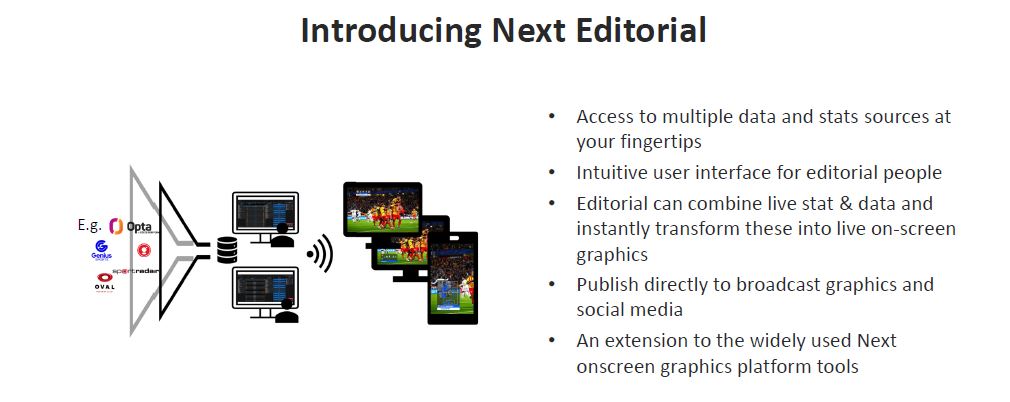
In onze voetbalverslaggeving gaan we de Amerikanen achterna: steeds vaker krijgen we cijfers en statistieken te zien over zaken als balbezit, balveroveringen, passnauwkeurigheid of schoten op doel. Om de workflow van data naar graphics te ondersteunen, hebben ze bij Boost Graphics een nieuw platform: Next Editorial. ‘We laten AI zelfs al meedenken, dat levert mooie suggesties op.’
De kleur van de veters zal nog net niet worden vastgelegd, maar verder ontsnapt weinig aan de dataverzameling rond sportwedstrijden. Van elke speler kunnen eindeloze statistieken worden overlegd, van speelminuten tot voltooide passes, afgelegde afstand en heatmaps voor balcontacten. En dan hebben we het alleen nog over voetbal, maar vrijwel elke sportbond heeft contracten met zogenaamde ‘statproviders’, die alle mogelijke gegevens over wedstrijden, teams en spelers vastleggen en gegroepeerd kunnen uitserveren. Dat gebeurt alleen niet altijd even overzichtelijk, vertelt Jeroen van Rossum, director of operations bij Boost International. “De data die we in graphics op het scherm willen tonen, worden aangeleverd in verschillende formats. In de huidige werkwijze werkt de redacteur samen met de graphics operator om te bepalen welke data interessant zijn. Dan maakt de operator van die data een graphic en zet deze vervolgens live. Met Next Editorial heeft de redacteur niet alleen een tool beschikbaar die inzicht geeft in de beschikbare live data, hij kan die vervolgens ook zelf in een graphic template zetten als preview, die hij kiesbaar kan maken voor de operator. De benodigde graphics zijn er dus een stuk sneller, dat scheelt nogal tijdens een live-uitzending met de nodige tijdsdruk. Daarnaast hebben we een AI-functionaliteit toegevoegd die inhoudelijk suggesties kan doen op basis van de beschikbare live data.”
Betere storytelling
Die nieuwe functionaliteit kijkt mee in de data die wordt verstrekt door de statistiekleverancier. Omdat deze AI-tool de data leest en de context kent, kan de redacteur ’m gebruiken als een soort Copilot. Van Rossum: “Kijk, zegt het systeem, deze cijfers kunnen voor jou relevant zijn. Het is een recommendation engine. Het voordeel voor de redacteur is dat die in meerdere live databronnen kan zoeken om combinaties te maken tussen twee teams, om maar wat te noemen, of om juist heel specifieke info van één speler weer te geven. Hij heeft dat allemaal in een overzichtelijke interface beschikbaar, waarmee hij de graphic meteen kan voorbereiden. Dan ziet hij ook hoe het eruit komt te zien op het scherm.” Het voordeel gaat verder dan enkel tijdwinst. Doordat de redacteur de gesuggereerde of zelf voorbereide graphics snel in een vorm kan gieten, kan de operator zich volledig focussen op de wedstrijd. Van Rossum: “Als er extra info te geven is, dan komt de redacteur daar mee. Zo maak je samen het inhoudelijke verhaal, je hebt daar meer tijd voor. En zo krijg je betere storytelling. Next Editorial is een tool die de inhoudelijke mensen rondom een sportwedstrijd niet alleen ondersteunt en meer inzicht geeft, maar ook de snelheid van het live zetten van data in de vorm van graphics enorm verhoogt.”
AI als ondersteuning
Next Editorial is halverwege het vorige voetbalseizoen voor het eerst ingezet in Frankrijk en wordt sinds dit seizoen standaard bij iedere competitiewedstrijd in Ligue 1 gebruikt. De eerste ervaringen met het systeem zijn erg positief, ook de AI-tool werd in de eerste testfase goed ontvangen. De functie is beschikbaar binnen het platform, maar zal in de verschillende landen gefaseerd worden geïntroduceerd. “De redacteuren moeten ermee leren werken. Ze gaan hopelijk ervaren dat het fijn werkt als je slimme suggesties krijgt. Dat mag iedereen in zijn eigen tempo doen, maar ik verwacht dat ze dit snel zullen omarmen. We zetten AI in als ondersteuning, daar zit de meerwaarde ervan.”
ENGLISH VERSION BELOW
Boost Graphics’ new platform: Next Editorial
The smartest route from data to graphics
In football coverage, we are following the American lead; we are seeing more and more numbers and statistics on things like possession, ball recoveries, pass accuracy and shots on target. To support the workflow from data to graphics, Boost Graphics has launched a new platform, Next Editorial. The platform even lets AI think along, yielding smart suggestions.
They may not log lace colour just yet, but very little escapes data collection around sports matches. For every player there are endless statistics, from minutes played to completed passes, distance covered and heat maps for touches. And that is only football. Virtually every sports federation has contracts with stat providers, who record data about matches, teams and players and deliver it in grouped formats. That does not always arrive in an equally clear way, says Jeroen van Rossum, director of operations at Boost International. “The data we want to show as on-screen graphics is supplied in different formats. In the current workflow the editor works with the graphics operator to decide which data is interesting. The operator then turns that data into a graphic and puts it live. With Next Editorial the editor not only has a tool that gives insight into the available live data, but they can also place that data directly into a graphic template as a preview, which they can make selectable for the operator. The required graphics are produced much faster, which makes a big difference during a live broadcast with time pressure. On top of that we have added an AI feature that can make content suggestions based on the available live data.”
Better storytelling
The new feature analyses data from the stats providers. Because this AI tool reads the data and knows the context, the editor can use it like a copilot. Van Rossum adds, “In effect, the system highlights which numbers may be relevant — it acts as a recommendation engine. The advantage for the editor is that they can search across multiple live data sources to make combinations between two teams, for example, or to display very specific information about a single player. All of this is available within a clear interface, where the editor also sees how it will look on screen and can prepare the graphic immediately.”
The benefit goes beyond saving time. Because the editor can quickly shape the suggested or self-prepared graphics, the operator can focus fully on the match. “If there is extra information to add, the editor brings it in,” says Van Rossum. “That way you build the story together and have more time to focus on the content, which ultimately leads to better storytelling. Next Editorial not only supports the editorial team during a live sports match and gives them greater insight, it also greatly increases the speed at which live data can be taken on air as graphics.”
AI as support
Next Editorial was first deployed halfway through last football season in France and has been used by default for every league match in Ligue 1 since this season. The first experiences with the system were very positive, and the AI tool was also well received in the initial test phase. The feature is available within the platform and will be rolled out in phases across different countries. Van Rossum concludes, “Editors need to learn how to work with it, and everyone can adopt it at their own pace, but I expect they will embrace it quickly. We use AI as support; that is where its value lies.”
*English version below
Gravity Media zet een volgende stap in de integratie van haar activiteiten in Nederland en België. Met het vertrek van Kathleen Wellink per 1 maart als directeur Outside Broadcast & Studio’s wordt de operationele aansturing in de Benelux herijkt. “Klanten willen niet bij al die winkeltjes apart gaan shoppen.”
Koen Bredael, sinds zes jaar operationeel directeur van Gravity Media België en al sinds 1995 werkzaam bij het Vlaamse Videohouse, krijgt de rol van operationeel directeur over beide landen. De Antwerpenaar, die evenals zijn Belgische collega Bart De Maeyer, de Regional CEO van Gravity Media Europe, meerdere dagen per week in Hilversum neerstrijkt, wordt ondersteund door Gijs Vos, die als manager operations een uitgebreidere verantwoordelijkheid heeft binnen de Nederlandse organisatie.
De wijziging past binnen een bredere strategische beweging om de samenwerking tussen België en Nederland structureel te verdiepen. “Onze klanten organiseren zich steeds vaker Benelux-breed. Productiehuizen kijken niet meer per land, maar zoeken schaalvoordelen en synergie,” zegt Bredael. “Daar moet onze organisatie op aansluiten. Kathleen heeft hierin al goede stappen gezet op logistiek vlak. Echter kunnen we dit op meerdere vlakken nog verder optimaliseren. Daar gaan we nu echt tempo in maken.”
Media Services
Concreet betekent dit dat verschillende disciplines – meercamera, connectivity, ENG en Blue Label – onder één overkoepelende structuur worden samengebracht: Media Services. Die opzet sluit aan bij de veranderende vraag vanuit de markt. Grote producties bestaan steeds vaker uit een combinatie van meerdere diensten, waarbij klanten behoefte hebben aan centrale coördinatie en één aanspreekpunt. “Producenten willen geen ‘losse eilandjes’ meer,” aldus Bredael. “Ze zoeken oplossingen, geen afzonderlijke services. Door alles onder één koepel te brengen, kunnen we die rol beter invullen en de klant ontzorgen.”
Dezelfde structuur wordt zowel in Nederland als België doorgevoerd. Lokale productie blijft daarbij leidend; de integratie is primair organisatorisch en procesmatig van aard. Het gaat namelijk om het slimmer organiseren van kennis, innovatie en ondersteuning.” Binnen de nieuwe constellatie richt Gijs Vos zich op de backoffice en projectorganisatie. Alle projecten worden vanuit één centraal projectbureau aangestuurd, met gezamenlijke crewplanning en nauwere samenwerking tussen afdelingen. De operationele uitvoering en de aansturing van mensen en middelen vallen onder Koen Bredael. “Door de projectbureaus fysiek en organisatorisch samen te brengen, creëren we meer efficiëntie en betere afstemming tussen disciplines,” zegt Gijs Vos. “Dat is een duidelijke verandering ten opzichte van de eerdere, meer gescheiden werkwijze.”
Internationale ervaring als versneller
Gravity Media werkt al jaren intensief samen binnen de internationale groep, onder meer bij grote evenementen zoals dit jaar de Olympische Spelen, het WK voetbal en Roland Garros. ‘’Die ervaring wordt nu explicieter benut voor de Benelux-markt zegt Vos.’’ Ook producties als Love Island worden al ‘grensoverschrijdend’ uitgevoerd. “Wat we internationaal hebben geleerd over schaal, remote productie en samenwerking, zetten we lokaal in,” aldus Bredael. “Dat is een duidelijke meerwaarde voor onze klanten.”
Twee domeinen zijn expliciet nu al Benelux-breed georganiseerd: innovatie en Livecentre (MCR). Voor dat laatste wordt één gezamenlijke aansturing ingericht, met Jasper Jurgens als verantwoordelijke voor zowel Nederland als België. Beide landen zijn al via vaste glasvezelverbindingen aan elkaar gekoppeld en werken met main- en backup-structuren over de grens. Ook innovatie wordt centraal aangestuurd. Nieuwe technologieën, waaronder software-based en remote productiemodellen, worden niet langer per land ontwikkeld, maar gedeeld binnen de Benelux en daarbuiten. Projecten als het World Economic Forum in Davos, dat volledig remote en software-based wordt geproduceerd, illustreren die aanpak.
Markt onder druk
Deze herstructurering bij Gravity Media Nederland en België vindt plaats tegen de achtergrond van toenemende financiële ‘uitdagingen’ zoals dat eufemistisch heet. “Die zijn in beide landen vergelijkbaar,” zegt Bredael. “Budgetten staan onder druk en tegelijkertijd versnelt de technologische ontwikkeling.” AI speelt daarin een groeiende rol, met name in postproductie en content operations, zoals ondertiteling en metadata. In andere delen van het productieproces wordt nog vooral onderzocht waar daadwerkelijk efficiency te behalen valt. “Niet alles wat als AI wordt gepresenteerd, is dat ook. We maken daarin bewuste keuzes.” Met de nieuwe Benelux-structuur positioneert Gravity Media zich nadrukkelijk als geïntegreerde mediaservicepartner, voorbereid op verdere schaalvergroting, technologische versnelling en internationale samenwerking.
TEKST: Jeroen te Nuijl // Fotografie: Studio Kastermans
ENGLISH VERSION BELOW
Gravity Media strengthens Benelux structure with integrated Media Services
Gravity Media is taking the next step in the integration of its activities in the Netherlands and Belgium. With the departure of Kathleen Wellink as Director of Outside Broadcast & Studios on 1 March, operational management in the Benelux will be reassessed. “Customers don’t want to shop at all those different shops separately.”
Koen Bredael, who has been Operational Director of Gravity Media Belgium for six years and has worked at the Flemish Videohouse since 1995, will take on the role of Operational Director for both countries. The Antwerp native, who, like his Belgian colleague Bart De Maeyer, Regional CEO of Gravity Media Europe, spends several days a week in Hilversum, will be supported by Gijs Vos. Vos, as operations manager, has broader responsibilities within the Dutch organisation.
The change is part of a broader strategic move to deepen cooperation between Belgium and the Netherlands. “Our customers are increasingly organising themselves across the Benelux. Production companies no longer look at each country individually, but instead seek economies of scale and synergy,” says Bredael. “Our organisation must respond to this. Kathleen has already taken positive steps in this regard, particularly in logistics. However, we can further optimise this in several areas. We are now going to really pick up the pace in this regard.”
Media Services
In concrete terms, this means that various disciplines – multi-camera, connectivity, ENG and Blue Label – will be brought together under one umbrella structure: Media Services. This structure reflects changing market demand. Large productions increasingly consist of a combination of multiple services, with customers requiring central coordination and a single point of contact.
“Producers no longer want ‘separate islands’,” says Bredael. “They are looking for solutions, not separate services. By bringing everything under one umbrella, we can better fulfil that role and take care of everything for the customer.”
The same structure is being implemented in both the Netherlands and Belgium. Local production remains central; the integration is primarily organisational and process-related. It is about organising knowledge, innovation and support in a smarter way.”
Within the new constellation, Gijs Vos focuses on the back office and project organisation. All projects will be managed from a single, central project office, with joint crew planning and closer cooperation between departments. Koen Bredael is responsible for operational implementation and the management of people and resources.
“By bringing the project offices together physically and organisationally, we are creating greater efficiency and better coordination between disciplines,” says Gijs Vos. “This represents a clear change from the previous, more separate way of working.”
International experience as an accelerator
Gravity Media has been working intensively within the international group for years, including at major events such as this year’s Olympic Games, the World Cup and Roland Garros. That experience is now being used more explicitly for the Benelux market, says Vos.
Productions such as Love Island are also already being carried out ‘across borders’. “We are applying what we have learned internationally about scale, remote production and collaboration locally,” says Bredael. “That is a clear added value for our customers.”
Two areas are already explicitly organised across the Benelux: innovation and Livecentre (MCR). For the latter, a single joint management structure is being set up, with Livecentre Project Manager Jasper Jurgens responsible for both the Netherlands and Belgium. Both countries are already linked by fixed fibre optic connections and work with main and backup structures across the border. Innovation is also managed centrally across Benelux. New technologies, including software-based and remote production models, are no longer developed per country but shared across Benelux and beyond. Projects such as the World Economic Forum in Davos, which is produced entirely remotely, illustrate this approach.
Market under pressure
This restructuring at Gravity Media Netherlands and Belgium is taking place against a backdrop of increasing financial ‘challenges’, as they are euphemistically called. “These are similar in both countries,” says Bredael. “Budgets are under pressure and at the same time technological development is accelerating.”
AI is playing a growing role in this, particularly in post-production and content operations, such as subtitling and metadata. In other parts of the production process, research is still being conducted into where efficiency can actually be achieved. “Not everythingpresented as AI is actually AI. We make conscious choices in this regard,” Bredael adds.
With the new Benelux structure, Gravity Media is positioning itself as an integrated media service partner, prepared for further scaling, technological acceleration and international collaboration.
FACILITIES
TEXT: Jeroen te Nuijl // Photography: Studio Kastermans
*English version below
AI & Innovatie bij Gravity Media
Slimmer en efficiënter werken, sneller produceren en meer ruimte voor creativiteit; dat is de belofte van AI. Maar de toekomst van media wordt niet alleen bepaald door veranderende technologie, ook door de mensen die ermee werken. Daarom krijgt kunstmatige intelligentie binnen Gravity Media steeds meer vorm, in de producties, maar vooral onder collega’s. Innovatie is voor Gravity Media geen afdeling, maar een houding. “Bedenken wat we nóg beter, efficiënter, slimmer of sneller kunnen, daar krijgen wij energie van.”
AI is allang geen ver-van-je-bedshow meer voor Gravity Media. Al jaren wordt er geëxperimenteerd met toepassingen die het werk efficiënter en kwalitatief beter maken. Dat begon jaren geleden al met speech-to-text: het automatisch omzetten van spraak in tekst, zodat redacties sneller materiaal kunnen doorzoeken. “Toen was de techniek nog pril,” vertelt product- en innovatiemanager Cafer Poslu, “maar inmiddels is de nauwkeurigheid zo goed dat we de data direct kunnen gebruiken in de montage. Daardoor kunnen editors bijvoorbeeld binnen enkele seconden alle fragmenten terugvinden waarin iemand over ‘blauwe schoenen’ praat. Dat scheelt enorm veel tijd.” AI speelt een sleutelrol in de toekomstvisie van Gravity Media. Cafer: “We zijn een facilitaire partij. Dat betekent dat klanten bij ons terechtkomen als ze expertise nodig hebben. Dan is het belangrijk dat wij weten wat er mogelijk is in de markt en hoe we dat kunnen toepassen. Niet alleen voor onszelf, maar juist voor onze klanten.”
Maatwerk
Om AI optimaal in de workflows te integreren kiest Gravity Media er bewust de toepassing in nauwe samenwerking met klanten vorm te geven. “We onderzoeken welke tools en technologieën het meest relevant en effectief zijn en hoe ze écht kunnen bijdragen aan het productieproces. Zo krijgen klanten niet alleen inzicht in wat er mogelijk is, maar ook in welke impact bepaalde toepassingen hebben op hun eigen workflow. Vanuit onze adviserende rol zetten we onze kennis en ervaring in om geschikte oplossingen te selecteren, testen en vertalen naar praktische tools die aantoonbare meerwaarde bieden, in efficiëntie, kwaliteit én tijdswinst.”
Mensenwerk
Technologie optimaliseert dus de processen, waardoor er meer tijd overblijft voor het creatieve vakmanschap. “AI mag nooit het menselijke vervangen,” benadrukt Cafer. “Het moet ons ondersteunen. Wij willen dat creatieven juist meer ruimte krijgen voor wat ze het liefst doen: maken. Als AI helpt om onze repeterende taken – het zogenaamde ‘monnikenwerk’ – uit handen te nemen, kunnen mensen zich richten op het creatieve proces. Dat is waar de kwaliteit vandaan komt.” Om AI breder te verankeren in de organisatie, worden collega’s gestimuleerd om te leren, experimenteren en hun kennis te delen. In summer schools konden ze laagdrempelig kennismaken met AI. Cafer: “Wat kan het, hoe gebruik je het, hoe prompt je goed? Want dat is een vak op zich: leren hoe je een AI-systeem aanstuurt om het juiste resultaat te krijgen. Die trainingen werken; mensen worden nieuwsgierig en gaan zelf ontdekken wat het voor hun werk kan betekenen.”
Changemakers
Cafer merkt dat AI voor velen nog een vaag gegeven kan zijn. “Je weet dat het er is, maar nog niet wat er allemaal mogelijk is en hoe je het moet toepassen. Daardoor blijft het een complex en ongrijpbaar iets.” Om het voor collega’s concreet te maken neemt Gravity Media deel aan het Changemakers-programma. Cafer: “Dat gaat verder dan alleen begrijpen wat AI is en hoe we het kunnen inzetten, het gaat ook om collega’s activeren. Hoe brengen we AI naar de voorgrond?” Negen maanden lang volgen deelnemers uit verschillende mediabedrijven een traject waarin AI, design thinking en persoonlijk leiderschap samenkomen. Bryan Boor, hoofd van de vakgroep Live Graphics, is een van de deelnemers: “Changemakers is een programma waarin je zoveel mogelijk bagage krijgt om uiteindelijk verandering teweeg te brengen in je eigen organisatie,” vertelt hij. “Je leert theoretisch wat AI is en hoe je het kunt inzetten om jouw problematiek op te lossen. Maar je werkt ook aan jezelf. Hoe presenteer je een idee, hoe overtuig je anderen, hoe neem je mensen mee in verandering? Dat maakt het programma zo sterk. We hoeven niet in negen maanden een product te lanceren. We moeten vooral een beweging starten. Dat AI iets normaals wordt binnen onze organisatie. Dat collega’s niet denken: ‘Dat is niets voor mij’, maar juist: ‘Wat kan ik ermee?’”
Dat past bij hoe Gravity Media innovatie ziet: als iets wat begint bij mensen. Cafer: “We kunnen de slimste tools hebben, maar zonder draagvlak gebeurt er niets. Daarom is het Changemakers-programma zo waardevol. Door kennis te delen, gaan we sneller vooruit. We willen met AI onze processen verbeteren en nieuwe diensten ontwikkelen, maar altijd op een manier die past bij wie we zijn: menselijk, betrokken en professioneel.”
ENGLISH VERSION BELOW
AI and innovation at Gravity Media
Work smarter, more efficient, produce faster, create more room for creativity. That is the promise of AI. But the future of media is shaped not only by changing technology, it is shaped by the people who use it. That is why artificial intelligence is taking on a bigger role within Gravity Media, in productions and especially among colleagues. For Gravity Media, innovation is not a department, it is a mindset. “Thinking about what we can do even better, more efficient, smarter or faster, that is what energises us.”
AI has long since stopped being something distant for Gravity Media. For years we have been experimenting with applications that make the work more efficient and improve quality. This started years ago with speech to text, the automatic conversion of speech to text so that editorial teams can search material more quickly. “The technology was still in its infancy back then,” says product and innovation manager Cafer Poslu, “but the accuracy is now so good that we can use the data directly in the edit. That allows editors to find within seconds all the clips in which someone talks about blue shoes. It saves a huge amount of time.”
AI plays a key role in Gravity Media’s vision for the future. Cafer: “We are a facilities partner. That means clients come to us when they need expertise. It is important that we know what is possible in the market and how we can apply it. Not only for ourselves, but above all for our clients.”
Tailor made
To integrate AI optimally into workflows, Gravity Media deliberately shapes each application in close collaboration with clients. “We research which tools and technologies are most relevant and effective and how they can truly contribute to the production process. That way clients gain insight into what is possible and into the impact that certain applications have on their own workflow. From our advisory role we use our knowledge and experience to select and test suitable solutions and translate them into practical tools that deliver proven added value in efficiency, quality and time savings.”
People first
Technology optimises processes, which leaves more time for creative craftsmanship. “AI should never replace the human element,” Cafer emphasizes. “It should support us. We want creatives to have more room for what they love to do most, to make. If AI helps to take repetitive tasks off our hands, the so called monk’s work, people can focus on the creative process. That is where quality comes from.”
To anchor AI more broadly in the organisation, colleagues are encouraged to learn, experiment and share knowledge. During summer schools they could get to know AI in an accessible way. Cafer: “What can it do, how do you use it, how do you prompt well. That is a discipline in its own right, learning how to steer an AI system to get the right result. These trainings work. People become curious and start discovering for themselves what it can mean for their work.”
Changemakers
Cafer notices that AI can still feel vague for many. “You know it is there, but not yet what is possible and how to apply it. That keeps it complex and elusive.” To make it concrete for colleagues, Gravity Media is taking part in the Changemakers program. Cafer: “It goes beyond understanding what AI is and how we can use it. It is also about activating colleagues. How do we bring AI to the foreground.”
For nine months, participants from different media companies follow a track in which AI, design thinking and personal leadership come together. Bryan Boor, head of the Live Graphics discipline, is one of the participants. “Changemakers is a program that gives you as much baggage as possible to ultimately bring about change in your own organisation,” he says. “You learn in theory what AI is and how you can deploy it to solve your challenges. You also work on yourself. How do you present an idea, how do you persuade others, how do you bring people along in change. That is what makes the program so strong. We do not have to launch a product in nine months. We mainly need to start a movement. That AI becomes something normal within our organization. That colleagues do not think, that is not for me, but rather, what can I do with it.”
That fits the way Gravity Media views innovation, as something that starts with people. Cafer: “We can have the smartest tools, but without support nothing happens. That is why the Changemakers program is so valuable. By sharing knowledge, we move forward faster. We want to improve our processes with AI and develop new services, but always in a way that matches who we are, human, engaged and professional.”
*English version below
Het meest revolutionaire aspect van de IRIS Box is dat het postproductieteam niet meer hoeft te wachten tot het materiaal fysiek in Hilversum is, postproductie start vanaf nu met één druk op de knop
Een zwarte koffer – formaatje handbagage – met een touchscreen en wat sleuven voor geheugenkaarten. Zo simpel lijkt het. Toch schuilt er achter de IRIS Box een technische innovatie die de manier waarop mediaproducties op locatie werken, ingrijpend verandert. Een proces dat normaal gesproken uren of zelfs dagen kost, is nu in één simpele handeling gedaan. De IRIS Box kopieert, back-upt en verstuurt het materiaal direct naar de post-omgeving (Gravity Media Cloud), zodat de postproductie al kan beginnen terwijl er op locatie nog wordt gedraaid.
De kiem voor de IRIS Box werd gelegd tijdens een productie op verschillende locaties met meerdere camjo’s, waarvan beelden razendsnel bij de editors terecht moesten komen. “We merkten hoe afhankelijk we waren van mensen op locatie die bestanden moesten kopiëren, labelen en opsturen,” vertelt product- en innovatiemanager Cafer Poslu. “Dat ging weleens mis of kostte veel tijd.”
Uit die frustratie ontstond het idee voor een slimme, geautomatiseerde oplossing. “We wilden een box die alles zelf regelt: herkennen van het type camera, controleren, bestanden in de juiste mappen zetten, veiligstellen, back-uppen én versturen.” Die visie leidde anderhalf jaar geleden tot de eerste schetsen van de IRIS Box: Interactive Remote Ingest Solution. De hard- en software werden vervolgens door de Nederlandse tak van Gravity Media zelf ontwikkeld en gebouwd. “Het moest niet alleen technisch briljant zijn, maar ook zo gebruiksvriendelijk dat zelfs iemand zonder technische kennis het kan bedienen,” zegt Cafer. “Je stopt het kaartje erin, drukt op start en de box doet de rest.”
Een slimme koffer
De IRIS Box ziet eruit als een robuuste flightcase, die je zo in het handbagagevak van het vliegtuig schuift. Binnenin bevindt zich een klein, volledig geautomatiseerd systeem met een intuïtieve interface die eenvoudig te bedienen is via het touchscreen. De gebruiker hoeft alleen maar een geheugenkaart te plaatsen en de software herkent automatisch of het gaat om bestanden van een Sony-camera, GoPro, drone of audiorecorder. “Het maakt niet uit waar het vandaan komt,” benadrukt Cafer, “de box weet wat het is en sorteert het meteen in de juiste mappenstructuur.” Tijdens dat proces maakt IRIS meerdere back-ups en voert integriteitschecks uit op bitniveau. “We willen honderd procent zeker weten dat het materiaal dat op het kaartje stond, identiek is aan wat we opslaan. Een dag aan opnames verliezen is onbetaalbaar. Met IRIS verklein je dat risico praktisch tot nul. Omdat de box werkt met vertrouwelijke en vaak kostbare beelden, wordt alles opgeslagen en versleuteld verstuurd. Zo zorgt IRIS voor maximale betrouwbaarheid.”
Het meest revolutionaire aspect van de IRIS Box is dat het postproductieteam niet meer hoeft te wachten tot het materiaal fysiek in Hilversum is, wat vooral bij internationale producties een enorme winst in tijd, moeite en CO2-uitstoot oplevert. “Zodra de box begint te uploaden, verschijnt er een LowRes-versie van het materiaal in de Gravity Media Cloud. Onze redacteuren en editors kunnen dus al spotten, loggen of monteren terwijl er nog wordt gedraaid. In de praktijk betekent dit: snellere levering, meer flexibiliteit in de montage en de mogelijkheid om direct te sturen terwijl de opnames nog lopen. Near-live postproductie dus.” Dat bleek onlangs bij een Europese productie, waarvan de eerste aflevering iets minder dan twee weken na de start van de opnames al op televisie moest zijn. “Met IRIS konden we de beelden van de dag direct gebruiken. De volgende ochtend was alles gelogd en gesynct. Zonder de box was dat onmogelijk geweest.”
Duurzamer produceren
Naast snelheid levert IRIS ook grote besparingen op. “Je hebt geen mediamanager of complete postploeg meer nodig op locatie,” zegt Cafer. “Geen laptops, geen externe schijven, geen ingewikkelde kabelstructuren. Dat scheelt niet alleen mankracht, maar ook transport, tijd en geld. Productieteams hoeven zich niet meer druk te maken over back-ups of foutmeldingen. Ze stoppen het kaartje erin en weten: alles staat veilig in de cloud. Projectleiders kunnen zelfs op afstand live meekijken wat er met de box gebeurt. Ze zien precies welk kaartje wordt ingeladen, hoeveel er al is gekopieerd en of alles goed is aangekomen. Dat geeft rust en controle.” “Het mooiste vind ik dat iets wat begon als een intern experiment nu een concrete verandering in de praktijk teweegbrengt. Wereldwijd zijn er wel deeloplossingen te vinden, maar geen enkele die alles combineert.” Gravity Media heeft de intentie de IRIS Box als white-label oplossing op de markt te brengen. “Je hoeft straks niet per se klant bij ons te zijn om IRIS te gebruiken. Dat is het mooie van innovatie: wat in-house begint, kan de hele sector vooruit helpen. We voegen continu functionaliteiten toe op basis van feedback uit het veld, want we willen dat de hele workflow – van opname tot uitzending – in één soepele flow verloopt. Ook kijken we hoe we AI kunnen gebruiken voor automatische beeldherkenning of log-suggesties. Daarmee maken we de workflow nóg slimmer. We lopen voor op de markt, maar dit voelt vooral als een startpunt. Dit is pas het begin.”
ENGLISH VERSION BELOW
The most revolutionary aspect of the IRIS Box is that the post production team no longer has to wait for the material to arrive physically in Hilversum. From now on, post production starts at the push of a button.
A black case, carry on size, with a touchscreen and a few slots for memory cards. It looks simple. Yet behind the IRIS Box sits a technical innovation that fundamentally changes how on location media productions work. A process that normally takes hours or even days is now done in one easy action. The IRIS Box copies, backs up and sends the material straight to the post environment, Gravity Media Cloud, so post production can start while filming on location is still underway.
The seed for the IRIS Box was planted during a multi-location production with several camjos, where footage needed to reach the editors at lightning speed. “We noticed how dependent we were on people on location who had to copy, label and send files,” says product and innovation manager Cafer Poslu. “That sometimes went wrong or took a lot of time.”
Out of that frustration came the idea for a smart, automated solution. “We wanted a box that handles everything by itself, recognizing the camera type, checking, placing files in the right folders, safeguarding, backing up and sending.”
That vision led to the first sketches of the IRIS Box, Interactive Remote Ingest Solution, about a year and a half ago. The hardware and software were then developed and built in house by Gravity Media’s Dutch team. “It had to be not only technically brilliant, but also so user friendly that even someone without technical knowledge could operate it,” says Cafer. “You insert the card, tap start and the box does the rest.”
A smart case
The IRIS Box looks like a rugged flight case that slides straight into an aircraft overhead bin. Inside is a compact, fully automated system with an intuitive interface that you control via the touchscreen. The user only needs to insert a memory card, and the software automatically recognizes whether the files come from a Sony camera, a GoPro, a drone or an audio recorder. “It does not matter where it comes from,” Cafer says, “the box knows what it is and immediately sorts it into the correct folder structure.”
During that process IRIS creates multiple backups and performs bit level integrity checks. “We want to be one hundred percent sure that the material on the card is identical to what we store. Losing a day of shooting is priceless. With IRIS you reduce that risk to practically zero. Because the box handles confidential and often valuable footage, everything is stored and sent encrypted. IRIS delivers maximum reliability.”
The most revolutionary aspect of the IRIS Box is that the post team no longer has to wait for the material to arrive physically in Hilversum, which is a huge gain in time, effort and CO₂ emissions, especially for international productions. “As soon as the box starts uploading, a low res version of the material appears in the Gravity Media Cloud. Our producers and editors can already spot, log or start cutting while filming is still in progress. In practice this means faster delivery, more flexibility in the edit and the ability to give immediate direction while the shoot is still running. Near live post production.”
That proved itself recently on a European production where the first episode had to be on television in just under two weeks after the start of filming. “With IRIS we could use the footage from the day straight away. The next morning everything was logged and synced. Without the box that would have been impossible.”
Producing more sustainably
Besides speed, IRIS delivers major savings. “You no longer need a media manager or a full post team on location,” says Cafer. “No laptops, no external drives, no complex cable setups. That saves manpower, transport, time and money. Production teams no longer have to worry about backups or error messages. They insert the card and know everything is safely in the cloud. Project managers can even monitor live remotely what the box is doing. They see exactly which card is being ingested, how much has been copied and whether everything has arrived correctly. That brings peace of mind and control.”
“The best part to me is that something that started as an internal experiment is now creating real change in practice. You can find partial solutions around the world, but none that combine everything.”
Gravity Media intends to bring the IRIS Box to market as a white label solution. “You will not necessarily have to be our client to use IRIS. That is the beauty of innovation, what starts in house can move the entire sector forward. We are continuously adding functionality based on feedback from the field, because we want the entire workflow, from capture to transmission, to run in one smooth flow. We are also exploring how we can use AI for automatic image recognition or logging suggestions. That will make the workflow even smarter. We are ahead of the market, but this mostly feels like a starting point. This is only the beginning.”
*English version below
De slimste weg van data naar graphics
In onze voetbalverslaggeving gaan we de Amerikanen achterna: steeds vaker krijgen we cijfers en statistieken te zien over zaken als balbezit, balveroveringen, passnauwkeurigheid of schoten op doel. Om de workflow van data naar graphics te ondersteunen, hebben ze bij Boost Graphics een nieuw platform: Next Editorial. ‘We laten AI zelfs al meedenken, dat levert mooie suggesties op.’
De kleur van de veters zal nog net niet worden vastgelegd, maar verder ontsnapt weinig aan de dataverzameling rond sportwedstrijden. Van elke speler kunnen eindeloze statistieken worden overlegd, van speelminuten tot voltooide passes, afgelegde afstand en heatmaps voor balcontacten. En dan hebben we het alleen nog over voetbal, maar vrijwel elke sportbond heeft contracten met zogenaamde ‘statproviders’, die alle mogelijke gegevens over wedstrijden, teams en spelers vastleggen en gegroepeerd kunnen uitserveren. Dat gebeurt alleen niet altijd even overzichtelijk, vertelt Jeroen van Rossum, director of operations bij Boost International. “De data die we in graphics op het scherm willen tonen, worden aangeleverd in verschillende formats. In de huidige werkwijze werkt de redacteur samen met de graphics operator om te bepalen welke data interessant zijn. Dan maakt de operator van die data een graphic en zet deze vervolgens live. Met Next Editorial heeft de redacteur niet alleen een tool beschikbaar die inzicht geeft in de beschikbare live data, hij kan die vervolgens ook zelf in een graphic template zetten als preview, die hij kiesbaar kan maken voor de operator. De benodigde graphics zijn er dus een stuk sneller, dat scheelt nogal tijdens een live-uitzending met de nodige tijdsdruk. Daarnaast hebben we een AI-functionaliteit toegevoegd die inhoudelijk suggesties kan doen op basis van de beschikbare live data.”
Betere storytelling
Die nieuwe functionaliteit kijkt mee in de data die wordt verstrekt door de statistiekleverancier. Omdat deze AI-tool de data leest en de context kent, kan de redacteur ’m gebruiken als een soort Copilot. Van Rossum: “Kijk, zegt het systeem, deze cijfers kunnen voor jou relevant zijn. Het is een recommendation engine. Het voordeel voor de redacteur is dat die in meerdere live databronnen kan zoeken om combinaties te maken tussen twee teams, om maar wat te noemen, of om juist heel specifieke info van één speler weer te geven. Hij heeft dat allemaal in een overzichtelijke interface beschikbaar, waarmee hij de graphic meteen kan voorbereiden. Dan ziet hij ook hoe het eruit komt te zien op het scherm.” Het voordeel gaat verder dan enkel tijdwinst. Doordat de redacteur de gesuggereerde of zelf voorbereide graphics snel in een vorm kan gieten, kan de operator zich volledig focussen op de wedstrijd. Van Rossum: “Als er extra info te geven is, dan komt de redacteur daar mee. Zo maak je samen het inhoudelijke verhaal, je hebt daar meer tijd voor. En zo krijg je betere storytelling. Next Editorial is een tool die de inhoudelijke mensen rondom een sportwedstrijd niet alleen ondersteunt en meer inzicht geeft, maar ook de snelheid van het live zetten van data in de vorm van graphics enorm verhoogt.”

AI als ondersteuning
Next Editorial is halverwege het vorige voetbalseizoen voor het eerst ingezet in Frankrijk en wordt sinds dit seizoen standaard bij iedere competitiewedstrijd in Ligue 1 gebruikt. De eerste ervaringen met het systeem zijn erg positief, ook de AI-tool werd in de eerste testfase goed ontvangen. De functie is beschikbaar binnen het platform, maar zal in de verschillende landen gefaseerd worden geïntroduceerd. “De redacteuren moeten ermee leren werken. Ze gaan hopelijk ervaren dat het fijn werkt als je slimme suggesties krijgt. Dat mag iedereen in zijn eigen tempo doen, maar ik verwacht dat ze dit snel zullen omarmen. We zetten AI in als ondersteuning, daar zit de meerwaarde ervan.”
ENGLISH VERSION BELOW
Boost Graphics’ new platform: Next Editorial
The smartest route from data to graphics
In football coverage, we are following the American lead; we are seeing more and more numbers and statistics on things like possession, ball recoveries, pass accuracy and shots on target. To support the workflow from data to graphics, Boost Graphics has launched a new platform, Next Editorial. The platform even lets AI think along, yielding smart suggestions.
They may not log lace colour just yet, but very little escapes data collection around sports matches. For every player there are endless statistics, from minutes played to completed passes, distance covered and heat maps for touches. And that is only football. Virtually every sports federation has contracts with stat providers, who record data about matches, teams and players and deliver it in grouped formats. That does not always arrive in an equally clear way, says Jeroen van Rossum, director of operations at Boost International. “The data we want to show as on-screen graphics is supplied in different formats. In the current workflow the editor works with the graphics operator to decide which data is interesting. The operator then turns that data into a graphic and puts it live. With Next Editorial the editor not only has a tool that gives insight into the available live data, but they can also place that data directly into a graphic template as a preview, which they can make selectable for the operator. The required graphics are produced much faster, which makes a big difference during a live broadcast with time pressure. On top of that we have added an AI feature that can make content suggestions based on the available live data.”
Better storytelling
The new feature analyses data from the stats providers. Because this AI tool reads the data and knows the context, the editor can use it like a copilot. Van Rossum adds, “In effect, the system highlights which numbers may be relevant — it acts as a recommendation engine. The advantage for the editor is that they can search across multiple live data sources to make combinations between two teams, for example, or to display very specific information about a single player. All of this is available within a clear interface, where the editor also sees how it will look on screen and can prepare the graphic immediately.”
The benefit goes beyond saving time. Because the editor can quickly shape the suggested or self-prepared graphics, the operator can focus fully on the match. “If there is extra information to add, the editor brings it in,” says Van Rossum. “That way you build the story together and have more time to focus on the content, which ultimately leads to better storytelling. Next Editorial not only supports the editorial team during a live sports match and gives them greater insight, it also greatly increases the speed at which live data can be taken on air as graphics.”
AI as support
Next Editorial was first deployed halfway through last football season in France and has been used by default for every league match in Ligue 1 since this season. The first experiences with the system were very positive, and the AI tool was also well received in the initial test phase. The feature is available within the platform and will be rolled out in phases across different countries. Van Rossum concludes, “Editors need to learn how to work with it, and everyone can adopt it at their own pace, but I expect they will embrace it quickly. We use AI as support; that is where its value lies.”
*English version below
Een ode aan de hoofdstad, een meesterwerk van de makers
Over sommige samenwerkingen hoef je niet na te denken, die gebeuren. Zoals die tussen productiehuis OOTRR (Out Of The Rat Race) en Gravity Media (EMG) voor de officiële viering van 750 jaar Amsterdam. Op 27 oktober vormde het Museumplein het kloppend hart van een muzikale liveshow waarin stad, muziek en televisie – live én in de huiskamers – in elkaar overvloeiden. Een complex project dat de lat van live televisie hoger heeft gelegd.
Een jaar vol festiviteiten bereikte op 27 oktober – de officiële verjaardag van Amsterdam – zijn hoogtepunt. In aanwezigheid van Koning Willem-Alexander, Koningin Máxima en prinses Amalia sloot een weergaloze muzikale liveshow het jubileumjaar af. Wat aanvankelijk was bedoeld als een grootse productie in de Johan Cruijff ArenA groeide noodgedwongen uit tot een nóg ambitieuzer plan. “Door de Champions League en de Amsterdam Marathon bleken zowel de ArenA als het Olympisch Stadion niet beschikbaar”, vertelt Jessica Stam, producent en managing partner van OOTRR. Ze verhuisden daarop naar het hart van de stad. “We bouwden op het Museumplein letterlijk from scratch een ‘Ziggo Dome van tentdoek’. Samen met alle andere opnames was het een enorme logistieke en technische operatie in een omgeving en onder omstandigheden die daar allesbehalve op ingericht waren. Dat maakte het ingewikkeld, maar ook bijzonder.”

Is dit live?
Voor wie het gemist heeft (terugkijken is alleen vakmatig al een tip): in die tent op het Museumplein vond een muzikaal eerbetoon aan Amsterdam plaats. De live optredens in de tent werden op ingenieuze wijze verweven met vooraf opgenomen acts op iconische locaties verspreid door de stad, zoals de A’DAM Toren, de Nieuwe Kerk, de Sloterplas en het Olympisch Stadion. Daarnaast vertelden bekende Nederlanders uit alle windstreken – van de Friese Foppe de Haan tot de Limburgse Chantal Janzen – in speciale postcards over hun band met de hoofdstad.
Daarmee werd niet alleen duidelijk dat dit geen Amsterdams feestje was, maar een nationaal eerbetoon, maar ook dat de producent niet over één nacht ijs ging. De beelden werden in post op Amsterdamse gebouwen geprojecteerd. “Net als bij The Passion wilden we de suggestie wekken alsof alles live gebeurde”, legt Stam uit. “De kijker moest zich afvragen: is dit nú, of eerder opgenomen? Daarom hebben we alle opnames ‘s avonds in het donker gedraaid. Dronebeelden boven de stad lieten zien dat heel Amsterdam ‘aan’ stond, met het Museumplein als stralend middelpunt van de festiviteiten.” Het resultaat: een visueel rijk programma dat, zoals Stam trots zegt, “de Eurovisie-standaard heeft gehaald – misschien zelfs overstegen. Dit hebben we nog nooit eerder gedaan, we hebben echt een stap gemaakt in wat voor moois je kunt maken.”
Kan niet bestaat niet
Stam vond het belangrijk dat de show niet alleen voor televisie werd gemaakt. “We hadden 2.500 mensen in de tent en die moesten het gevoel hebben dat ze bij een liveshow stonden, niet bij een tv-registratie. Dus we hebben daar een grote band neergezet met strijkers, blazers en dansers. Het moest in de zaal net zo magisch zijn als op televisie.” Die dubbele ambitie – live én televisie op topniveau – maakte de productie extra uitdagend. Alles moest kloppen: de timing, belichting, audio, het ritme. Dat lukt alleen met de juiste mensen op de juiste plek. “En dan bel je Gijs”, zegt Stam stellig. Aan de facilitaire kant stond Gravity Media aan het roer, onder leiding van Gijs Vos, manager operations. “De kunst was om het creatieve plan van OOTRR technisch mogelijk te maken, zonder in te leveren op kwaliteit”, vertelt Vos. Stam: “Ik werk al bijna twintig jaar met Gijs. Ons eerste gezamenlijke project was Serious Request in Den Haag. Sindsdien hebben we samen tientallen producties gedaan: Noorderslag, Sail, de opening van het Rijksmuseum, het Eurovisie Songfestival. Eigenlijk doen we alles wat we voor televisie maken samen met Gravity Media. Omdat het werkt. Omdat Gijs gewoon ongelooflijk goed is. We zijn op elkaar ingespeeld. Hij weet wat ik bedoel, ik weet wat ik aan hem heb. Als hij zegt dat iets niet kan, dan weet ik dat het inderdaad onmogelijk is. Die duidelijkheid is goud waard.” Vos vult aan: “We hebben hetzelfde doel: het hoogst haalbare neerzetten. Als iets niet lukt, dan pas omdat we alles hebben uitgeprobeerd.” Hij is sinds tweeënhalf jaar als manager operations verantwoordelijk voor de operatie bij Gravity Media, maar vindt het belangrijk zelf ook af en toe nog steeds op de vloer te staan. “Ik doe bijvoorbeeld projecten als we iemand te kort komen of stap in als er zo’n groot project als dit voor OOTRR langskomt. Want op locatie met niks beginnen en na twee dagen met een hele ploeg iets moois te hebben neergezet, dat blijft het leukst om te doen.”

Teamwork
Voor Vos is de sleutel tot succes eenvoudig: de juiste mensen. “We hebben veel vaste krachten, maar we kijken per project wie waar het best tot zijn recht komt.” Stam: “De club mensen Gravity Media waarmee ik de afgelopen maanden heb gewerkt, was heerlijk. Een deel van hen heb ik zien opgroeien, die heb ik bij wijze van spreken kabels zien sjouwen, en die zag ik nu echt heel toffe dingen doen. Het mooie was ook: ik heb geen gemopper gehoord. Zelfs toen we tot drie uur ’s nachts in de metro bij het Centraal Station draaiden, stond iedereen er met een glimlach.” Vos zag hetzelfde enthousiasme toen hij bij opnames in het Rijksmuseum was. “Iedereen liep met een grote smile rond. Bij een groot traject met veel draaidagen is het een uitdaging om er één ploeg op te krijgen, terwijl het van toegevoegde waarde is als de mensen een band met de regisseur opbouwen. Dat was met dit project geen probleem. Het team dat het nu heeft gedaan, vond het fantastisch om te doen. Als ik iemand wilde ontzien omdat ze die ochtend al een ander project hadden, dan kreeg ik te horen: ik doe het erbij, dit pak je me niet af. De ploeg was een mix van ervaren rotten en jonge talenten die de kans kregen zich te bewijzen. Die combinatie werkt.”

Alles vanuit de wagen
“De grootste technische uitdaging was dat we het anders aanpakten dan gebruikelijk”, geeft Vos aan. “Normaal gesproken loopt ‘live’ en ‘opgenomen’ gescheiden van elkaar. In dit geval niet. Alles werd vanuit de regiewagen centraal aangestuurd, ook wat er in de zaal gebeurde. Dat is niet per se nieuw, maar dat tijdcodes voor licht, geluid, schermen – alles! – uit de regiewagen komen zodat de liveshow en de instarts tot op de milliseconde synchroon liepen, was anders dan wat mensen gewend waren.” Daarnaast zette Gravity Media ook de Ronin 4D in, terwijl je die in principe niet live kan shaden en hij dus voor een liveshow eigenlijk niet altijd het meest geschikt is. Vos: “We kunnen die nu wel gelijk krijgen met de andere camera’s door een beeldtechnicus ter plekke verantwoordelijk te maken voor de colorgrading van die enkele camera. Dat vereist specialisme, dus daar stond een van onze ervaren mensen op. Dit zijn dingen die wij doen die Jessica niet eens weet. Of wil weten.” Stam: “Als het werkt en mooi is, is het goed.” Maar de grootste uitdagingen waren niet de apparatuur, innovatieve oplossingen of het team, dat waren de locaties en het weer. Opnames vonden plaats op plekken die niet op een televisieopname waren ingericht. “We hebben op daken gestaan waar alles via een trapgat een voor een omhoog moest worden getild”, vertelt Stam. “We draaiden op de Nieuwe Kerk tijdens code oranje. Terwijl de wind knoerthard loeide, stonden cameramensen met krukjes bij het hoofd van Edsilia Rombley om het geluid te dempen. Bizar, maar het zag er fantastisch uit.” Ook de opname op de Sloterplas was een avontuur. “We hadden een ponton midden op het water, in de volle wind en camera’s op boten eromheen. Het was spannend, maar bloedmooi.” Het weer werkte gelukkig ook mee op cruciale momenten. “In het Olympisch Stadion stond een vleugel van tonnen voor Wibi Soerjadi midden op de stip. Het móést droog blijven. Dat lukte precies. Soms heb je dat geluk.”

Twee jubilarissen
Toevalligerwijs viel de Nationale Viering precies samen met het vijfjarig bestaan van OOTRR. “Op 27 oktober 2020 deden we ons allereerste project: het Concert van Hoop”, vertelt Stam. “Mijn collega Henkjan (Oosterink, red.) had bedacht dat we in coronatijd, toen heel evenementenland stillag, wel met vijftig man in een leeg Ahoy konden staan. We waren toen in gesprek met de EO en zij vroegen: met welk bedrijf zitten we eigenlijk om tafel? We hadden nog geen bedrijf, er waren alleen een paar oriënterende gesprekken geweest over een eventuele samenwerking. Ik zat op dat moment nog midden in het Songfestival en toen moesten we opeens een bedrijf oprichten. Ik kende Henkjan, maar Maarten (Hogenhuis, red.) was meer een contact van Henkjan.” Het bracht hun ‘oriënterende gesprekken’ in een stroomversnelling: ze richtten met z’n drieën Out Of The Rat Race op. “En toen hadden we ineens een uitzending met 1,3 miljoen kijkers. Daarna mochten we – ook met EMG – Jochem in de wolken doen en Kerstduetten. Dat is zo’n project waar eigenlijk nooit geld voor is, maar waarvan we elke keer weer denken: wel tof om te doen. Dan gaan we toch weer samen nadenken hoe we met zo min mogelijk geld toch iets moois kunnen maken.” Gijs: “Bij deze projecten moet je soms met creatieve oplossingen te komen om binnen de beschikbare budgetten te blijven. Dat je af en toe toch zulke dingen kunt doen met elkaar maakt ons werk juist leuk.” Dat een productiehuis dat ‘pas’ vijf jaar bestaat nu zo’n prestigeproject in handen heeft gekregen, is bewonderenswaardig. Stam: “Het is natuurlijk niet zo dat we hiervoor niets hebben gedaan, maar ik ben er wel echt heel trots op dat we in vijf jaar tijd dit soort projecten mogen doen. Dit is een monument voor iedereen die eraan heeft gewerkt. Ik zeg ook tegen mijn kinderen: luister, als er over vijftig jaar weer een jubileum is, dan ben ik er niet meer, maar dan is het wel heel tof dat wij deze editie hebben gedaan.” Alhoewel… Stam: “Wij hebben nu de productie van vijftig jaar geleden in de Beurs van Berlage gekeken en dachten: Jezus, wat waren ze daar aan het doen? Waarschijnlijk denken ze dat over vijftig jaar ook over ons, maar dat is dan. Nu, op dit moment, hebben wij er samen iets geweldigs van gemaakt.”
5 jaar OOTRR & Gravity Media
- Concert van Hoop: 2020-2021
- Jochem in de wolken 2022-2023
- Concert for Change: 2022
- Concert op de Amstel: 2022-2023
- 10 jaar Koningsdag Rotterdam: 2023
- Grand Opening Paleis ’t Loo: 2023
- Koningsdag Emmen: 2024
- De Nationale Kerstboom: 2024
- Kerstduetten, 1x Dordrecht, 2x Loenen ad Vecht
Foto’s: Hans Duran, Bart Heemskerk en Luchtfilm Producties
Broadcast Magazine artikel
ENGLISH VERSION BELOW
An ode to the capital, a tour de force by the makers
Some collaborations do not need much thinking, they just happen. That was the case with the partnership between production house OOTRR, Out Of The Rat Race, and Gravity Media, EMG, for the official celebration of 750 years of Amsterdam. On 27 October, Museumplein became the beating heart of a musical live show in which city, music and television flowed together, live on site and in living rooms. A complex project that raised the bar for live television.
A year of festivities reached its peak on 27 October, the official birthday of Amsterdam. In the presence of King Willem Alexander, Queen Máxima and Princess Amalia, a spectacular musical live show closed the jubilee year. What was first conceived as a grand production in the Johan Cruijff ArenA had to grow into an even more ambitious plan. “Because of the Champions League and the Amsterdam Marathon, both the ArenA and the Olympic Stadium were unavailable,” says Jessica Stam, producer and managing partner at OOTRR. They moved to the heart of the city. “At Museumplein we literally built a Ziggo Dome made of tent cloth from scratch. Together with all the other shoots it became a huge logistical and technical operation in an environment and under conditions that were not designed for it. That made it complicated, but also special.”
Is this live?
For anyone who missed it, and from a professional point of view it is well worth watching back, the tent at Museumplein hosted a musical tribute to Amsterdam. The live performances in the tent were ingeniously interwoven with pre recorded acts at iconic locations around the city, such as the A’DAM Tower, the Nieuwe Kerk, the Sloterplas and the Olympic Stadium. Well known Dutch personalities from all regions, from Frisian coach Foppe de Haan to Limburg presenter Chantal Janzen, told in special postcards about their connection to the capital. That made two things clear. This was not just an Amsterdam party, it was a national tribute. It also showed the producer’s meticulous approach. The images were projected in post on Amsterdam buildings. “Just like The Passion, we wanted to suggest that everything was happening live,” Stam explains. “The viewer had to wonder, is this happening now, or was it recorded earlier? That is why we filmed everything in the evening, in the dark. Drone images above the city showed that all of Amsterdam was switched on, with Museumplein as the radiant center of the festivities.” The result was a visually rich program that, as Stam says with pride, “reached the Eurovision standard, maybe even surpassed it. We had never done this before, we really took a step forward in what beautiful things you can make.”
There is no such thing as cannot
Stam felt it was important that the show was not made for television alone. “We had 2,500 people in the tent and they needed to feel they were at a live show, not at a television recording. So we put a large band on stage with strings, brass and dancers. It had to be just as magical in the venue as it was on television.” That double ambition, live and television at the highest level, made the production extra challenging. Everything had to be right, timing, lighting, audio, rhythm. That only works with the right people in the right place. “And then you call Gijs,” Stam says firmly. On the facilities side, Gravity Media took the lead, under the direction of Gijs Vos, manager operations. “The challenge was to make OOTRR’s creative plan technically possible without compromising on quality,” Vos explains. Stam: “I have been working with Gijs for almost twenty years. Our first project together was Serious Request in The Hague. Since then we have done dozens of productions together, Noorderslag, Sail, the opening of the Rijksmuseum, the Eurovision Song Contest. In fact, we do everything we make for television together with Gravity Media. Because it works. Because Gijs is incredibly good. We are tuned to each other. He knows what I mean, I know what I can expect from him. If he says something cannot be done, I know it is truly impossible. That clarity is worth gold.” Vos adds, “We share the same goal, deliver the highest achievable. If something does not work, it is only after we have tried everything.” He has been responsible for operations at Gravity Media for two and a half years, but he finds it important to be on the floor now and then. “I step in on projects if we are short of someone, or I join when a project as big as this one for OOTRR comes along. Starting on location with nothing and, two days later, having built something beautiful with a whole crew, that remains the most fun to do.”
Teamwork
For Vos, the key to success is simple, the right people. “We have many permanent staff members, but we look per project at who fits best where.” Stam: “The Gravity Media team I worked with in recent months was a joy. I have seen some of them grow up, I have, so to speak, seen them carry cables, and now I saw them do truly impressive things. The great thing was, I did not hear any grumbling. Even when we filmed in the metro at Central Station until three in the morning, everyone was there with a smile.” Vos saw the same enthusiasm when he was at the shoots in the Rijksmuseum. “Everyone walked around with a big smile. On a long trajectory with many shoot days it is a challenge to keep one crew on it, while it really helps when people build a bond with the director. That was no problem on this project. The team that did it now thought it was fantastic to do. If I wanted to give someone a break because they already had another project that morning, I would hear, I will do it as well, you are not taking this away from me. The crew was a mix of seasoned veterans and young talents who got the chance to prove themselves. That combination works.”
Everything from the truck
“The biggest technical challenge was that we approached it differently than usual,” says Vos. “Normally live and recorded run separately. This time they did not. Everything was centrally controlled from the production truck, including what happened in the venue. That is not new in itself, but having timecode for lighting, audio, screens, everything, originate from the truck so that the live show and the inserts were aligned to the millisecond, that was different from what people are used to.” Gravity Media also deployed the Ronin 4D, which in principle you cannot shade live and which therefore is not always ideal for a live show. Vos: “We can now match it to the other cameras by making a vision engineer on site responsible for color grading that single camera. That requires specialist skill, so we put one of our experienced people on it. These are the things we do that Jessica does not even know about. Or want to know.” Stam: “If it works and looks beautiful, it is good.” But the biggest challenges were not the equipment, the innovative solutions or the team. They were the locations and the weather. Filming took place at places that were not set up for television production. “We were on rooftops where everything had to be lifted up one by one through a stairwell,” says Stam. “We filmed in the Nieuwe Kerk during an orange weather alert. While the wind was howling, camera operators placed stools near Edsilia Rombley’s head to dampen the sound. Bizarre, but it looked fantastic.” The shoot at the Sloterplas was an adventure as well. “We had a pontoon in the middle of the water, in full wind, and cameras on boats around it. It was tense, but stunningly beautiful.” The weather also cooperated at crucial moments. “In the Olympic Stadium a grand piano weighing tons stood on the center spot for Wibi Soerjadi. It had to stay dry. That is exactly what happened. Sometimes you get lucky.”
Two anniversaries
By coincidence, the National Celebration fell exactly on OOTRR’s fifth anniversary. “On 27 October 2020 we did our very first project, the Concert of Hope,” Stam says. “My colleague Henkjan, Oosterink, had the idea that in the COVID period, with the event sector at a standstill, we could still be with fifty people in an empty Ahoy. We were in talks with EO and they asked, which company are we actually sitting down with. We did not have a company yet, there had only been a few exploratory conversations about a possible collaboration. I was still in the middle of the Song Contest and suddenly we had to set up a company. I knew Henkjan, but Maarten, Hogenhuis, was more a contact of Henkjan.” Those exploratory talks suddenly accelerated. The three of them founded Out Of The Rat Race. “And then we suddenly had a broadcast with 1.3 million viewers. After that we were allowed to do Jochem in de wolken and Kerstduetten, also with EMG. That is one of those projects for which there is never really enough money, but every time we think, it is too cool not to do. So we start thinking together again about how to make something beautiful with as little money as possible.” Gijs: “On these projects you sometimes have to come up with creative solutions to stay within the available budgets. Being able to do things like this together every now and then is what makes our work fun.” That a production house that is only five years old now handled such a prestige project is remarkable. Stam: “Of course it is not as if we had done nothing before this, but I am genuinely proud that we get to do projects like this after five years. This is a monument to everyone who worked on it. I also tell my children, listen, if there is another jubilee in fifty years, I will not be around, but it is very cool that we did this edition.” Although, Stam adds, “We watched the production from fifty years ago in the Beurs van Berlage and thought, good grief, what were they doing there. They will probably think the same about us in fifty years, but so be it. Right now, at this moment, we made something wonderful together.”
Gravity Media, the leading force in production and content, media services and facilities, has successfully delivered the World Athletics Championships 2025, for HBS and Tata, the Host Broadcasters of the event, hosted at Tokyo’s National Stadium from 13th-21st September 2025.
Gravity Media provided the full technical infrastructure and operational expertise capturing the event for millions of viewers around the globe as the World Athletics Championships celebrated its 20th edition, welcoming over 2,000 athletes from almost 200 nations, competing across 49 track and field events.
Returning to Tokyo for the first time since 1991, the competition featured nine days of world-class athletics, spanning sprints, field events, relays, and long-distance races. Gravity Media’s strong technical team of 68 oversaw a fully IP-based production environment, powered by diPloy and Gravity Media’s scalable and modular ST2100 IP broadcast concept.
At the heart of the operation, five production galleries were situated in mobile production units, all linked by a centralised IP network management system. This is the same proven solution that Gravity Media successfully deployed for the Opening Ceremony and Athletics competition in Paris 2024.
A dedicated Gravity diPloy flight-pack also provided the international feeds for the event. Composed of two production clusters, around 200 switches were connected, 1,400 nodes were in operation, and more than 9,000 audio and video streams flowed across the IP network, reaching a total of 310,000 unique IP senders. This was one of the largest diPloy deployments to date and a prime example of the type of large-scale, complex project that IP and automation were designed to handle.
The tournament coverage was captured using over 75 camera channels, supported by Gravity Media’s specialist camera systems including a 110-metre railcam, and vertical track rigs, all operated by Gravity Media’s dedicated crews to provide dynamic and overhead perspectives.
25 EVS VIA servers with clip management feeding into the World Athletics online MAM system handled replays and content, plus 115 intercom panels were deployed to ensure seamless communication between the production team throughout the event.
To ensure a unified delivery, Gravity Media’s specialist equipment was shipped from Brussels via sea freight, and over 28 tonnes of broadcast equipment departed via air freight to ensure timely on-site integration.
Chris Demeulemeester – International Projects & Sales commented:
“We’re delighted to have delivered a full suite of production, content, and media services for one of the most prestigious athletics events on the calendar. Our cutting-edge IP workflows, specialist crews, and global-scale logistics ensured an exceptional viewing experience for audiences worldwide.”
The World Athletics Championships 2025 saw the world’s best athletes compete in across nine thrilling days, with Gravity Media playing a role to ensure every moment of the action was captured in spectacular detail for viewers across the globe.
Bart Lucassen – HBS, Director of Logistics and Engineering & Etienne Godart – HBS, Head of Live Broadcast Solutions:
“We enjoyed a strong delivery from Gravity Media, with their technical solutions allowing us a seamlessly project delivery for World Athletics and bringing this showcase event to audiences around the world. Trusted suppliers are an essential component of the Host Broadcast role and working with a team we know can provide the expertise we need to deliver the capture and distribution concept we have developed for our client is invaluable during such a complex event.”
PRESS COVERAGE
SVG Europe
Gravity Media, the leading force in production and content, media services and facilities, today confirmed a successful collaboration with Southfields and Tennis Australia that saw Gravity Media implement the broadcast technology and television production undertaking for the second round Qualifiers of the Davis Cup – the biggest men’s team event in tennis – in The Netherlands and Australia.
This global event featured some of the world’s best tennis players, and took place across multiple venues internationally, with Gravity Media onsite in two locations of the second round Qualifiers.
The Netherlands was represented by Jesper de Jong, Botic van de Zandschulp, Guy Den Ouden, Sander Arends and Sem Verbeek will play Argentina’s Francisco Cerundolo, Tomas Martin Etcheverry, Francisco Comesana, Horacio Zeballos and Andres Molteni at The Hague’s Martiniplaza across 12th to 13th September.
Australia was represented by Alex de Minaur, Alexei Popyrin, Jordan Thompson and Matthew Ebden will play Belgium’s Zizou Bergs, Raphael Collignon, Kimmer Coppejans, Sander Gille and Joran Vliegen at Sydney Olympic Park Tennis Centre’s Ken Rosewall Arena across 13th to 14th September.
The undertaking for the qualifying round in Sydney added further depth to Gravity Media’s long-term partnership with Tennis Australia in the delivery of broadcast technology and production requirements for the Laver Cup, the Billie Jean Cup, the Australian Open and Australia’s summer of tennis.
As part of the partnership with Tennis Australia and Southfields, Gravity Media accessed internationally acknowledged camera and broadcast and production technologies coupled with cellular and cloud-based solutions.
In a major production undertaking, Gravity Media deployed seven cameras in the Netherlands and 13 cameras in Australia, alongside state-of-the-art high definition outside broadcast truck technology.
The Davis Cup qualifying round was broadcast on the 9Network in Australia, Ziggo Sport in the Netherlands and globally on international broadcasters.
Kevin Vandoorne, Broadcast & Media Technical Manager at Tennis Australia commented:
“Our partnership is built on trust, collaboration, and understanding – by combining our vision with their broadcast expertise, we ensured a seamless production and a truly successful event.”
Ben Madgwick, Sales Director at Gravity Media in Australia stated:
“Gravity Media partnered with Tennis Australia to provide broadcast technical services for the second round Qualifier of the Davis Cup in Sydney Olympic Park. This was the first Davis Cup tie on home soil in three years and utilised our extensive tennis broadcast experience to ensure flawless coverage and meet the event’s content requirements.”
Lex Meijer, Senior Account Manager at Gravity Media in The Netherlands commented:
“Gravity Media NL and Southfields have been long-standing partners for the coverage of Davis Cup matches in the Netherlands. They draw on our many years of tennis production experience to ensure flawless coverage and to meet the event’s content requirements.”
PRESS COVERAGE
*English version below
Van ‘bezemkast’ naar 24/7 sportknooppunt
In nog geen tien jaar tijd is het Livecentre van Gravity Media NL getransformeerd van een ‘bijzaak’ in een donkere hoek van het gebouw op het Hilversumse Media Park tot een internationaal sportknooppunt. Met eerst Ziggo Sport en nu ESPN als voorhoedespelers, een 24/7-operatie en een infrastructuur klaar voor de volgende stap in remote productie, is Livecentre stevig verbonden met de sportwereld – letterlijk én figuurlijk.

Tom Eshuis en Jasper Jurgens, respectievelijk manager Technology en projectmanager Livecentre, zijn beiden al bijna 25 jaar actief bij Gravity Media NL, voorheen EMG Nederland. Tom en Jasper werken onder andere veel samen op satellietterrein en weten nog goed hoe het allemaal begon: “In een soort bezemkast, met een halve edit set en een multiviewer voor als we keer wat live moesten doen in onze eigen studio’s of in postproductie, dan konden we dat zelf bemannen. Maar na 2019, in de coronatijd, is het echt gaan vliegen: veel livestreams gedaan, kleine remote producties en webinars, in samenwerking met Quadia toen nog (nu Motionmakers).”
“Vervolgens kwam Talpa erbij met dagelijkse programma’s, gingen we dat ook voor RTL doen en werd extra ruimte ingericht op onze Postplaza. Toen ook die te klein werd, hebben we nu misschien wel de fijnste plek van het pand. Onze mensen kunnen werken bij daglicht en hebben zicht op het weer en de schotels, altijd handig bij satellietverbindingen.”
Stepping stone
Niet lang na die verplaatsing wordt de eerste grote klant gecontracteerd: Ziggo Sport. “Dat is wel de stepping stone voor ons huidige trackrecord geweest”, beseft Jurgens. “Tot dan toe deden we voornamelijk de routering van studioproducties zoals de dagelijkse RTL Boulevard-uitzendingen en ondersteuning van file based workflows voor ENG-klanten, maar een groot contract voor sourcing, het binnenhalen van live feeds, was nieuw en onze eerste stap naar continuïteit en 24/7 bezetting. Toen we bewezen dat ook machtig te zijn, kregen we de kans om serieus mee te doen aan de ESPN-tender.”
Het binnenhalen van dat (meerjarige) contract betekent letterlijk een verdubbeling van de werkzaamheden, zowel qua mensen als middelen – onder andere driehonderd ‘afkijkplaatjes’ aan de wand. Een investering van een paar miljoen euro. Eshuis: “Ook voor ESPN zijn we de MCR en doen we de sourcing, maar dan voor alle kanalen; negen in Nederland. Veel feeds worden in Nederland geproduceerd maar zijn eigenlijk internationaal, zoals ESPN Afrika en Star Channel in China.”
Connectiviteit
De infrastructuur is hybride: satelliet én glasvezel. Livecentre is gekoppeld aan internationale knooppunten zoals BT Tower in Londen en grote MCR’s in de VS, maar dat niet alleen. Jurgens: “De connectiviteit in fiber is enorm gegroeid, ook met partijen die produceren voor ESPN én, wat het echt wel uniek maakt, we doen ook de verbindingen voor de Eredivisie en een groot deel van de KKD; dus alle stadionbeelden komen ook hier binnen.”
”Nieuwe compressietechnieken zorgen voor forse efficiëntieslag”
Binnen Gravity Media vormt Hilversum een driehoek met Gravity Media België en Londen (Westworks). Eshuis: “Zware onweersbuien bijvoorbeeld kunnen downlinks verstoren, maar dan kan een feed elders worden binnengehaald en via fiber worden doorgestuurd.” Daarnaast maken nieuwe compressietechnieken het mogelijk meerdere lijnen over één verbinding te sturen zonder zichtbaar kwaliteitsverlies – een forse efficiëntieslag. “Dat hebben we samen met ESPN uitgedacht”, aldus Jurgens. “De klant is technisch goed onderlegd en wij konden duidelijk maken hoe we het wilden doen en zij konden dat zeer waarderen.”
HDR
Met de start van het ESPN-contract gaat de zender in één klap volledig over op High Dynamic Range (HDR). Niet een paar programma’s, maar álles: studio, instarts, postproductie en distributie. Jurgens: “Voor ons was 1 juli spannend, maar voor ESPN helemaal.” Eshuis: “Wereldwijd zijn er niet veel broadcasters die zo’n ingrijpende verandering van SDR naar HDR, zonder uitzonderingen, aandurven; erg ambitieus en stoer vind ik. En dat zie je ook, de kwaliteit spat van het scherm.”
Voor de kijker betekent het levendigere kleuren en meer detail. Fluorescerende shirts zijn ook écht fel, contrastverschillen blijven zichtbaar, ook in de schaduw blijft detail behouden. “ESPN besteedt ook veel aandacht aan quality control, er zijn daadwerkelijk HDR supervisors die remote met de voetbalwedstrijden meekijken om te zorgen dat het allemaal matcht”, vult Eshuis aan. Sport die nog niet in HDR wordt aangeleverd, zoals Amerikaans honkbal, wordt in Hilversum realtime geconverteerd, compleet met correcte metadata.
diPloy
Technisch draait het Livecentre volledig op SMPTE ST 2110: gescheiden transport van video, audio en metadata over IP, met perfecte synchronisatie. Ideaal voor schaalbaarheid, maar in een 24/7-omgeving vraagt het om redundantie en slimme workflows. Daarvoor is er diPloy: een in-house ontwikkeld modulair, IP-based systeem waarin control, audio, video, intercom, monitoring en data samenkomen. Een vijfkoppig diPloy-team werkt letterlijk onder het Livecentre en levert maatwerktools en dagelijks support.
“Binnen Gravity Media is de koers duidelijk: steeds minder grote regiewagens op locatie”
Gravity Media NL beheert ook de volledige intercomstructuur tussen ESPN en de eindregie. Live commentaar uit binnen- en buitenland – of dat nu een Engelse voice-over is of een Franse veldrijcommentator – wordt via low-delay monitoring en strakke synchronisatie in de uitzending gebracht. Die mix van video, audio en communicatie maakt het Livecentre tot een breed inzetbare hub, zowel voor bestaande klanten als voor toekomstige remote producties.
Remote productie
Want dat is de toekomst, beseffen ook Jurgens en Eshuis: “Binnen Gravity Media is de koers duidelijk: steeds minder grote regiewagens op locatie. Dus steeds meer centrale regies via stabiele verbindingen, om zo alle locaties in de landen aangesloten te krijgen zodat we moeiteloos remote producties kunnen faciliteren in heel Europa of uiteindelijk wereldwijd als dat nodig is. We kunnen dat uncompressed met de hoogste kwaliteit feeds, maar ook via gecomprimeerde verbindingen voor bijvoorbeeld kleinere sporten.”
Livecentre speelt daarin een grote rol en die zal alleen maar crucialer worden, beseffen beiden. “Onze ruimte is modulair ingericht: alles kan verplaatst of verwijderd worden om ruimte te maken voor uitbreiding. En dat is waarschijnlijk geen overbodige luxe. De vraag groeit en de kans is groot dat we in de komende jaren opnieuw moeten opschalen.”
Tekst: Jeroen te Nuijl // Fotografie: Studio Kastermans
ENGLISH VERSION BELOW
From “broom closet” to 24/7 sports hub
In just under ten years, Gravity Media NL’s Livecentre has transformed from a side project in a dark corner of the building at Hilversum’s Media Park into an international sports hub. With first Ziggo Sport and now ESPN as frontrunners, a 24/7 operation, and an infrastructure ready for the next step in remote production, Livecentre is firmly connected to the sports world, literally and figuratively.
Tom Eshuis and Jasper Jurgens, respectively Manager Technology and Project Manager Livecentre, have both been active at Gravity Media NL, formerly EMG Nederland, for almost 25 years. Tom and Jasper work together often on satellite matters and remember well how it all started: “In a kind of broom closet, with half an edit set and a multiviewer for those times when we needed to do something live in our own studios or in post production, we could staff that ourselves. After 2019, during the COVID period, it really took off, many livestreams, small remote productions and webinars, in cooperation with Quadia back then, now Motionmakers.”
“Then Talpa came in with daily shows, we started doing that for RTL as well, and extra space was set up in our Postplaza. When that also became too small, we moved to what might be the nicest spot in the building. Our people can work in daylight and see the weather and the dishes, always useful with satellite links.”
Stepping stone
Not long after that move, the first major client was signed, Ziggo Sport. “That has been the stepping stone to our current track record,” Jurgens acknowledges. “Until then we mainly handled routing for studio productions like the daily RTL Boulevard broadcasts and supported file based workflows for ENG clients, but a large contract for sourcing, bringing in live feeds, was new and our first step toward continuity and a 24/7 staffing model. When we proved we could handle that, we got the chance to seriously compete in the ESPN tender.”
Winning that multi-year contract literally doubled the workload, in people and in equipment, including about three hundred monitoring tiles on the wall. An investment of a few million euros. Eshuis: “For ESPN we are also the MCR and we handle the sourcing, but then for all channels, nine in the Netherlands. Many feeds are produced in the Netherlands but are actually international, like ESPN Africa and Star Channel in China.”
Connectivity
The infrastructure is hybrid, satellite and fiber. Livecentre is connected to international nodes such as BT Tower in London and large MCRs in the United States, but not only that. Jurgens: “Connectivity over fiber has grown enormously, also with parties producing for ESPN and, which is quite unique, we also do the links for the Eredivisie and a large part of the KKD, so all stadium feeds come in here as well.”
”New compression techniques deliver a major efficiency gain”
Within Gravity Media, Hilversum forms a triangle with Gravity Media Belgium and London, Westworks. Eshuis: “Severe thunderstorms, for example, can disrupt downlinks, but then a feed can be brought in elsewhere and forwarded over fiber.” New compression techniques also make it possible to send multiple lines over a single connection without visible loss of quality, a major efficiency gain. “We worked that out together with ESPN,” says Jurgens. “The client is technically well versed, and we could clearly explain how we wanted to do it, which they appreciated.”
HDR
With the start of the ESPN contract, the broadcaster switched to High Dynamic Range in one go. Not a few programs, but everything, studio, inserts, post production and distribution. Jurgens: “July 1 was exciting for us, even more so for ESPN.” Eshuis: “Worldwide there are not many broadcasters who dare to make such a far-reaching change from SDR to HDR without exceptions. Very ambitious and bold, I think. And you can see it, the quality jumps off the screen.”
For viewers it means more vivid colors and more detail. Fluorescent shirts are truly bright, contrast differences remain visible, and detail is preserved in the shadows. “ESPN also pays a lot of attention to quality control, there are actual HDR supervisors who watch the football matches remotely to ensure everything matches,” Eshuis adds. Sports that are not yet delivered in HDR, such as American baseball, are converted in real time in Hilversum, complete with correct metadata.
diPloy
Technically, the Livecentre runs entirely on SMPTE ST 2110, separate transport of video, audio and metadata over IP with perfect synchronization. Ideal for scalability, yet in a 24/7 environment it requires redundancy and smart workflows. That is where diPloy comes in, an in-house developed modular, IP based system that brings control, audio, video, intercom, monitoring and data together. A five person diPloy team literally works beneath the Livecentre and delivers custom tools and daily support.
“Within Gravity Media the course is clear, fewer and fewer large OB trucks on site”
Gravity Media NL also manages the full intercom structure between ESPN and the final control room. Live commentary from home and abroad, whether that is an English voice-over or a French cyclo-cross commentator, is brought into the broadcast with low delay monitoring and tight synchronization. That mix of video, audio and communications makes the Livecentre a broadly deployable hub, for existing clients and for future remote productions.
Remote production
Because that is the future, Jurgens and Eshuis agree. “Within Gravity Media the course is clear, fewer large OB trucks on location. So increasingly central galleries via stable connections, so we can connect all locations in the countries and effortlessly facilitate remote productions across Europe or eventually worldwide if needed. We can do that uncompressed with the highest quality feeds, but also via compressed links for smaller sports, for example.”
Livecentre plays a major role in this, and that will only become more crucial, they realize. “Our space is modular by design, everything can be moved or removed to make room for expansion. That probably will not be a luxury. Demand is growing, and there is a good chance we will need to scale up again in the coming years.”
As the curtain fell on an unforgettable UEFA Women’s EURO, Gravity Media proudly celebrated its role, on behalf of UEFA, in delivering global live coverage of this landmark sporting event.
Technical teams from Gravity Media, representing four different countries, collaborated to deploy outside broadcast (OB) units at seven of the eight venues across Switzerland. By combining cutting-edge technology with exceptional talent, Gravity Media successfully produced the tournament for UEFA, culminating in the final, which saw England crowned champions.
Many of the matches were delivered by crews with a strong female presence – including guarantees and department heads – marking another important step in Gravity Media’s ongoing commitment to gender diversity and inclusion in the broadcast industry.
Gravity Media’s specialist camera team also supplied in-goal mini cameras for the host broadcast, while the radio frequency team provided crews and transmission links for Steadicams across seven of the tournament’s stadiums.
Additionally, Gravity Media delivered selected unilateral services on behalf of visiting broadcast partners during UEFA Women’s EURO 2025, including both fully and partially equipped commentary positions.
The Gravity Media teams worked together across all the host cities, led by Chrissie Collins, UK Head of OB Client Delivery, who commented:
“This has been a true testament to our global collaboration. Our teams have worked seamlessly across all the host cities to provide world-class coverage of this incredible tournament. It’s been especially inspiring to see so many talented women at the heart of our facilities’ delivery, and I’m incredibly proud to be part of such a formidable and passionate team.”
United Kingdom
NOVA 118 was deployed from the UK to multiple stadiums in Switzerland. Serving as a central hub and designed for maximum flexibility and efficiency, the OB truck allowed Gravity Media’s technical teams to deliver consistent coverage throughout the tournament.
Netherlands
From the Netherlands, Gravity Media deployed NOVA 106 and NOVA 107 to three stadiums with a dedicated technical team including camera operators, senior vision and EVS guarantees, communications engineers, audio technicians, riggers and a travelling team of three shaders.
Italy
NOVA 103 was stationed in Bern, staffed by a ten-person crew. Gravity Media’s Italian team successfully covered four matches, including three group-stage games and the quarter-final between Spain and Switzerland.
Belgium
Gravity Media Belgium contributed a travelling team comprising four ENG camera operators, two engineers and one audio assistant, working throughout Switzerland. Meanwhile, NOVA 102 was on-site at St. Gallen, staffed with a six-person crew.
Eamonn Curtin, Chief Commercial Officer, commented:
“Our work at the Women’s EURO has been a powerful reflection of our international capability, collaborative spirit, and technical excellence. As we step into a bold new era with our refreshed brand identity, we are proud to support iconic events like the UEFA Women’s EURO with the dedication and quality that define our teams around the world.”
This tournament marks the beginning of an exciting new chapter for Gravity Media, as the company continues to expand its global footprint and shape the future of production, content, media services and facilities.
‘Dit is het voordeel van al twintig jaar samenwerken’
Dat het Muziekfeest op het Plein ooit zou neerstrijken op de ring van Amsterdam, had niemand kunnen voorspellen. Toch is dat precies wat er op zaterdag 21 juni gebeurde. Ter ere van de twintigste verjaardag van het oer-Hollandse muziekprogramma en het 750-jarig bestaan van de hoofdstad sloegen de twee jubilarissen de handen ineen voor een spectaculaire, eenmalige editie op de A10. EMG stond twee decennia geleden al aan de wieg van het Muziekfeest op het Plein en verzorgt sindsdien – op één enkele editie na – onafgebroken de tv-registratie.

Twee keer per jaar, steeds op een mooie zomerdag, wordt ergens in Nederland een plein omgetoverd tot sfeervol muziekfeest. Het tv-programma is inmiddels een populair zomerevenement geworden: elke editie laat het uitverkoren plein uit zijn voegen barsten. Toch is Paul Siteur, eindredacteur en samensteller van Sterren NL bij AVROTROS, vrij stellig als hem wordt gevraagd: evenement of televisieprogramma? “We maken dit echt voor televisie. Dat betekent dat we pleinen met mooie plaatjes uitzoeken en een laag podium plaatsen, zodat de artiesten op tv tussen de mensen staan. Elk shot moet kloppen.”
Van de recentste editie, die eenmalig werd omgedoopt tot Muziekfeest op de Ring A10, was het ‘plein’ al geregeld, “maar dat was een extra grote uitdaging. Zo’n snelweg is maar 13 meter breed, terwijl de pleinen normaal gesproken zeker 40 meter breed zijn. Het was geen makkelijke plek, helemaal niet zelfs, maar we vonden dit zo’n unieke gelegenheid, dat we het absoluut wilden gaan doen. Nou, dat hebben we geweten. De tent stond op een viaduct, de regiewagen eronder. De opbouwtijd was erg kort, maar dat zijn we dan wel weer gewend. Logistiek was het erg ingewikkeld: we hadden met veel verschillende mensen van allerlei partijen te maken, van de gemeente tot Rijkswaterstaat. En voor iedereen was het nieuw.”
Siteur was daarom blij met EMG als oude, vertrouwde facilitaire partner aan zijn zij. “Ik had er alle vertrouwen in dat het in orde zou komen. Dit was zo’n leuke uitdaging, een once in a lifetime-gebeurtenis. Ik denk dat er van EMG zo’n 45 mensen rondliepen, met een camera of twaalf, die allemaal isolated opnamen. Daardoor konden we in de montage elk shot gebruiken, ook als dat niet door de regisseur was geschakeld. Omdat we het al zo lang met elkaar doen, wisten zij goed wat belangrijk was en sloot alles naadloos op elkaar aan.”

Dit is geen werk
EMG is al sinds de eerste editie in Alkmaar de vaste facilitaire partner voor Muziekfeest op het Plein. “Ze weten precies wat we nodig hebben en vooral: wat we bedoelen. Er is geen eindeloze uitleg nodig, dat is wat je krijgt als je al twintig jaar samenwerkt. Ze denken mee, lossen het snel op als er iets misgaat en zijn altijd goed voorbereid. In de loop der jaren hebben we het programma samen kwalitatief verbeterd. We blijven kijken naar wat we zien op televisie en wat we daar nog aan kunnen verbeteren. Wat zijn de juiste cameraposities en gebruiken we een kraan, een flyline of een drone om het massale van het evenement te laten zien?”
Wat Siteur vooral waardeert, is dat EMG geen anonieme leverancier is, maar een betrokken partner. “Ik prijs deze samenwerking, omdat de accountmanager, OPL en eerste cameramensen altijd goed meedenken. In eerste instantie ga ik met de regisseur op locatiebezoek, meestal volgt daarna nog een technisch locatiebezoek met de opnameleider en eerste cameraman van EMG, waarna we bijschaven waar nodig. Maar als de cameramensen ter plekke nog aangeven dat ze een nog mooier plaatje krijgen als ze een meter naar links verhuizen, dan vind ik dat alleen maar mooi. Ik zie altijd veel initiatief en vind het fijn dat het team meedenkt om het beste uit het programma te halen.”
Van cameramensen tot geluid en van OPL tot schakeltechniek; alles en iedereen draagt bij aan het eindresultaat. En wat Siteur keer op keer opvalt: het plezier straalt ervan af. “Ik werk al jarenlang met dezelfde cameramensen, omdat zij het, net als ik, een feestje vinden om dit te doen. Dit is voor hen bijna geen werk, ze vinden het leuk om erbij te zijn, kunnen zich inleven in het publiek en weten wat de kijker graag wil zien. Dus de faciliteiten kloppen en de expertise is er zeker, maar het gaat mij vooral om de mensen. Ik heb ze er graag bij.”

EMG / Gravity Media, a world leading global provider of complex live creative production and media services, is proud to announce that it will deliver comprehensive, live coverage of the highly anticipated 2025 Billie Jean King Cup by Gainbridge Qualifiers from 10th – 12th April 2025 in Australia and The Netherlands.
This global event set to feature some of the world’s best tennis players, will take place across multiple venues internationally. EMG / Gravity Media will be on site at two of the exciting locations: the Pat Rafter Arena located in Brisbane, Australia and the Sportcampus Zuiderpark located at The Hague in the Netherlands.
EMG / Gravity Media is collaborating with Tennis Australia and Dutch production company Southfields to implement the broadcast technology and television production for the qualifying round of the biggest women’s team event in tennis.
EMG / Gravity Media Australia has been appointed by Tennis Australia as the host broadcast company for the Billie Jean Cup qualifying event in Australia.
Building on a long-term partnership having successfully delivered coverage for the Australian Open, United Cup, and Laver Cup, as part of the growing partnership with Tennis Australia, for the Qualifiers, EMG / Gravity Media will access internationally acknowledged camera and broadcast and production technologies designed and developed by EMG / Gravity Media.
In a significant logistics and production undertaking, at the Pat Rafter Arena in Australia, EMG / Gravity Media will deploy 11 cameras and state-of-the-art high definition outside broadcast truck technology coupled with cellular and cloud-based solutions.
Beyond providing broadcast technologies, EMG / Gravity Media Australia is also working in collaboration with Tennis Australia and its Australian and global broadcast partners in creating, producing and delivering the complete television production of the event for audiences in Australia and across the world.
The EMG / Gravity Media team based in the Netherlands will be on site at the Sportcampus Zuiderpark located at The Hague on behalf of Southfields, capturing the live event across the three days for Ziggo Sport.
The Billie Jean Cup qualifiers will be broadcast on NINE Network Australia and globally on international broadcasters including Ziggo Sport.
Kevin Vandoorne – Broadcast & Media Technical Manager, at Tennis Australia commented:
“We are once again proud to partner with our broadcast technical services supplier, EMG / Gravity Media in Australia, for the Host Broadcast of the BJK Cup Qualifier. This partnership, which began in 2015, has proven to be incredibly positive and continues to grow and strengthen each year. It serves as a strong foundation for all our other endeavours, and we have complete confidence that it will continue to underpin both our live and non-live content creation.”
Ben Madgwick, Sales Director at EMG / Gravity Media in Australia stated:
“For another consecutive year, EMG / Gravity Media is partnering with Tennis Australia to provide Host Broadcast technical services for the upcoming BJK Cup Qualifier at the Queensland Tennis Centre and Pat Rafter Arena. Tennis Australia draws upon our extensive global and regional tennis expertise to support all aspects of the event, beyond our host broadcast responsibilities. Whether it’s the ELC, GFX, Arena Production, or Unilateral rights holders, our onsite team is equipped with the resources and technology to meet the event’s full range of linear and digital content requirement.”
EMG / Gravity Media is known worldwide for supplying high-quality broadcast equipment, production facilities, and project management support for productions great and small. EMG / Gravity Media continues to channel its technology and expertise into capturing every dramatic moment from over the past three decades.
EMG / Gravity Media has partnered with the International Tennis Federation (ITF), Billie Jean King Cup Limited (BJKC), ATP Media, and the Women’s Tennis Association (WTA) on every format of elite competition, including The Billie Jean King Cup Finals, The Davis Cup, Fed Cup, ATP Cup, and WTA Tour Championships. Plus been a long-term provider of equipment and crew for the ATP Masters 1000 Series and the ATP World Tour Finals, and supported all four Grand Slams, including multi-year, multi-camera contracts at the Australian, US, and French Opens.
PRESS COVERAGE
