*English version below
De slimste weg van data naar graphics
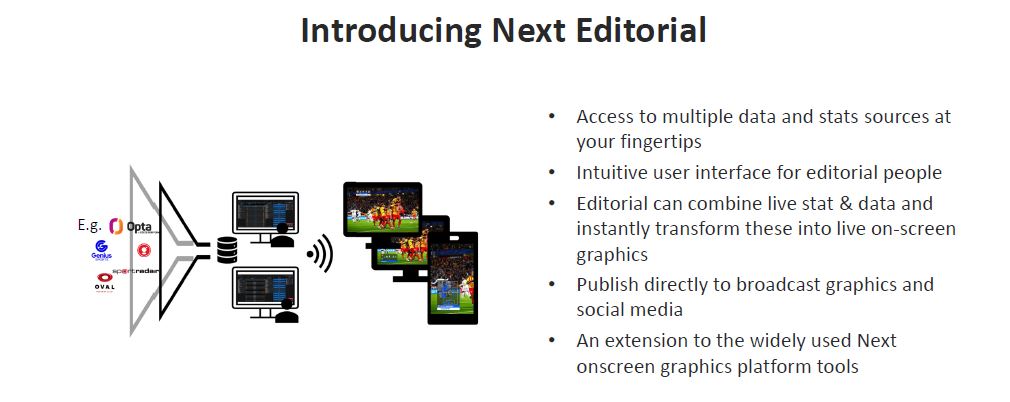
In onze voetbalverslaggeving gaan we de Amerikanen achterna: steeds vaker krijgen we cijfers en statistieken te zien over zaken als balbezit, balveroveringen, passnauwkeurigheid of schoten op doel. Om de workflow van data naar graphics te ondersteunen, hebben ze bij Boost Graphics een nieuw platform: Next Editorial. ‘We laten AI zelfs al meedenken, dat levert mooie suggesties op.’
De kleur van de veters zal nog net niet worden vastgelegd, maar verder ontsnapt weinig aan de dataverzameling rond sportwedstrijden. Van elke speler kunnen eindeloze statistieken worden overlegd, van speelminuten tot voltooide passes, afgelegde afstand en heatmaps voor balcontacten. En dan hebben we het alleen nog over voetbal, maar vrijwel elke sportbond heeft contracten met zogenaamde ‘statproviders’, die alle mogelijke gegevens over wedstrijden, teams en spelers vastleggen en gegroepeerd kunnen uitserveren. Dat gebeurt alleen niet altijd even overzichtelijk, vertelt Jeroen van Rossum, director of operations bij Boost International. “De data die we in graphics op het scherm willen tonen, worden aangeleverd in verschillende formats. In de huidige werkwijze werkt de redacteur samen met de graphics operator om te bepalen welke data interessant zijn. Dan maakt de operator van die data een graphic en zet deze vervolgens live. Met Next Editorial heeft de redacteur niet alleen een tool beschikbaar die inzicht geeft in de beschikbare live data, hij kan die vervolgens ook zelf in een graphic template zetten als preview, die hij kiesbaar kan maken voor de operator. De benodigde graphics zijn er dus een stuk sneller, dat scheelt nogal tijdens een live-uitzending met de nodige tijdsdruk. Daarnaast hebben we een AI-functionaliteit toegevoegd die inhoudelijk suggesties kan doen op basis van de beschikbare live data.”
Betere storytelling
Die nieuwe functionaliteit kijkt mee in de data die wordt verstrekt door de statistiekleverancier. Omdat deze AI-tool de data leest en de context kent, kan de redacteur ’m gebruiken als een soort Copilot. Van Rossum: “Kijk, zegt het systeem, deze cijfers kunnen voor jou relevant zijn. Het is een recommendation engine. Het voordeel voor de redacteur is dat die in meerdere live databronnen kan zoeken om combinaties te maken tussen twee teams, om maar wat te noemen, of om juist heel specifieke info van één speler weer te geven. Hij heeft dat allemaal in een overzichtelijke interface beschikbaar, waarmee hij de graphic meteen kan voorbereiden. Dan ziet hij ook hoe het eruit komt te zien op het scherm.” Het voordeel gaat verder dan enkel tijdwinst. Doordat de redacteur de gesuggereerde of zelf voorbereide graphics snel in een vorm kan gieten, kan de operator zich volledig focussen op de wedstrijd. Van Rossum: “Als er extra info te geven is, dan komt de redacteur daar mee. Zo maak je samen het inhoudelijke verhaal, je hebt daar meer tijd voor. En zo krijg je betere storytelling. Next Editorial is een tool die de inhoudelijke mensen rondom een sportwedstrijd niet alleen ondersteunt en meer inzicht geeft, maar ook de snelheid van het live zetten van data in de vorm van graphics enorm verhoogt.”
AI als ondersteuning
Next Editorial is halverwege het vorige voetbalseizoen voor het eerst ingezet in Frankrijk en wordt sinds dit seizoen standaard bij iedere competitiewedstrijd in Ligue 1 gebruikt. De eerste ervaringen met het systeem zijn erg positief, ook de AI-tool werd in de eerste testfase goed ontvangen. De functie is beschikbaar binnen het platform, maar zal in de verschillende landen gefaseerd worden geïntroduceerd. “De redacteuren moeten ermee leren werken. Ze gaan hopelijk ervaren dat het fijn werkt als je slimme suggesties krijgt. Dat mag iedereen in zijn eigen tempo doen, maar ik verwacht dat ze dit snel zullen omarmen. We zetten AI in als ondersteuning, daar zit de meerwaarde ervan.”
ENGLISH VERSION BELOW
Boost Graphics’ new platform: Next Editorial
The smartest route from data to graphics
In football coverage, we are following the American lead; we are seeing more and more numbers and statistics on things like possession, ball recoveries, pass accuracy and shots on target. To support the workflow from data to graphics, Boost Graphics has launched a new platform, Next Editorial. The platform even lets AI think along, yielding smart suggestions.
They may not log lace colour just yet, but very little escapes data collection around sports matches. For every player there are endless statistics, from minutes played to completed passes, distance covered and heat maps for touches. And that is only football. Virtually every sports federation has contracts with stat providers, who record data about matches, teams and players and deliver it in grouped formats. That does not always arrive in an equally clear way, says Jeroen van Rossum, director of operations at Boost International. “The data we want to show as on-screen graphics is supplied in different formats. In the current workflow the editor works with the graphics operator to decide which data is interesting. The operator then turns that data into a graphic and puts it live. With Next Editorial the editor not only has a tool that gives insight into the available live data, but they can also place that data directly into a graphic template as a preview, which they can make selectable for the operator. The required graphics are produced much faster, which makes a big difference during a live broadcast with time pressure. On top of that we have added an AI feature that can make content suggestions based on the available live data.”
Better storytelling
The new feature analyses data from the stats providers. Because this AI tool reads the data and knows the context, the editor can use it like a copilot. Van Rossum adds, “In effect, the system highlights which numbers may be relevant — it acts as a recommendation engine. The advantage for the editor is that they can search across multiple live data sources to make combinations between two teams, for example, or to display very specific information about a single player. All of this is available within a clear interface, where the editor also sees how it will look on screen and can prepare the graphic immediately.”
The benefit goes beyond saving time. Because the editor can quickly shape the suggested or self-prepared graphics, the operator can focus fully on the match. “If there is extra information to add, the editor brings it in,” says Van Rossum. “That way you build the story together and have more time to focus on the content, which ultimately leads to better storytelling. Next Editorial not only supports the editorial team during a live sports match and gives them greater insight, it also greatly increases the speed at which live data can be taken on air as graphics.”
AI as support
Next Editorial was first deployed halfway through last football season in France and has been used by default for every league match in Ligue 1 since this season. The first experiences with the system were very positive, and the AI tool was also well received in the initial test phase. The feature is available within the platform and will be rolled out in phases across different countries. Van Rossum concludes, “Editors need to learn how to work with it, and everyone can adopt it at their own pace, but I expect they will embrace it quickly. We use AI as support; that is where its value lies.”
*English version below
AI & Innovatie bij Gravity Media
Slimmer en efficiënter werken, sneller produceren en meer ruimte voor creativiteit; dat is de belofte van AI. Maar de toekomst van media wordt niet alleen bepaald door veranderende technologie, ook door de mensen die ermee werken. Daarom krijgt kunstmatige intelligentie binnen Gravity Media steeds meer vorm, in de producties, maar vooral onder collega’s. Innovatie is voor Gravity Media geen afdeling, maar een houding. “Bedenken wat we nóg beter, efficiënter, slimmer of sneller kunnen, daar krijgen wij energie van.”
AI is allang geen ver-van-je-bedshow meer voor Gravity Media. Al jaren wordt er geëxperimenteerd met toepassingen die het werk efficiënter en kwalitatief beter maken. Dat begon jaren geleden al met speech-to-text: het automatisch omzetten van spraak in tekst, zodat redacties sneller materiaal kunnen doorzoeken. “Toen was de techniek nog pril,” vertelt product- en innovatiemanager Cafer Poslu, “maar inmiddels is de nauwkeurigheid zo goed dat we de data direct kunnen gebruiken in de montage. Daardoor kunnen editors bijvoorbeeld binnen enkele seconden alle fragmenten terugvinden waarin iemand over ‘blauwe schoenen’ praat. Dat scheelt enorm veel tijd.” AI speelt een sleutelrol in de toekomstvisie van Gravity Media. Cafer: “We zijn een facilitaire partij. Dat betekent dat klanten bij ons terechtkomen als ze expertise nodig hebben. Dan is het belangrijk dat wij weten wat er mogelijk is in de markt en hoe we dat kunnen toepassen. Niet alleen voor onszelf, maar juist voor onze klanten.”
Maatwerk
Om AI optimaal in de workflows te integreren kiest Gravity Media er bewust de toepassing in nauwe samenwerking met klanten vorm te geven. “We onderzoeken welke tools en technologieën het meest relevant en effectief zijn en hoe ze écht kunnen bijdragen aan het productieproces. Zo krijgen klanten niet alleen inzicht in wat er mogelijk is, maar ook in welke impact bepaalde toepassingen hebben op hun eigen workflow. Vanuit onze adviserende rol zetten we onze kennis en ervaring in om geschikte oplossingen te selecteren, testen en vertalen naar praktische tools die aantoonbare meerwaarde bieden, in efficiëntie, kwaliteit én tijdswinst.”
Mensenwerk
Technologie optimaliseert dus de processen, waardoor er meer tijd overblijft voor het creatieve vakmanschap. “AI mag nooit het menselijke vervangen,” benadrukt Cafer. “Het moet ons ondersteunen. Wij willen dat creatieven juist meer ruimte krijgen voor wat ze het liefst doen: maken. Als AI helpt om onze repeterende taken – het zogenaamde ‘monnikenwerk’ – uit handen te nemen, kunnen mensen zich richten op het creatieve proces. Dat is waar de kwaliteit vandaan komt.” Om AI breder te verankeren in de organisatie, worden collega’s gestimuleerd om te leren, experimenteren en hun kennis te delen. In summer schools konden ze laagdrempelig kennismaken met AI. Cafer: “Wat kan het, hoe gebruik je het, hoe prompt je goed? Want dat is een vak op zich: leren hoe je een AI-systeem aanstuurt om het juiste resultaat te krijgen. Die trainingen werken; mensen worden nieuwsgierig en gaan zelf ontdekken wat het voor hun werk kan betekenen.”
Changemakers
Cafer merkt dat AI voor velen nog een vaag gegeven kan zijn. “Je weet dat het er is, maar nog niet wat er allemaal mogelijk is en hoe je het moet toepassen. Daardoor blijft het een complex en ongrijpbaar iets.” Om het voor collega’s concreet te maken neemt Gravity Media deel aan het Changemakers-programma. Cafer: “Dat gaat verder dan alleen begrijpen wat AI is en hoe we het kunnen inzetten, het gaat ook om collega’s activeren. Hoe brengen we AI naar de voorgrond?” Negen maanden lang volgen deelnemers uit verschillende mediabedrijven een traject waarin AI, design thinking en persoonlijk leiderschap samenkomen. Bryan Boor, hoofd van de vakgroep Live Graphics, is een van de deelnemers: “Changemakers is een programma waarin je zoveel mogelijk bagage krijgt om uiteindelijk verandering teweeg te brengen in je eigen organisatie,” vertelt hij. “Je leert theoretisch wat AI is en hoe je het kunt inzetten om jouw problematiek op te lossen. Maar je werkt ook aan jezelf. Hoe presenteer je een idee, hoe overtuig je anderen, hoe neem je mensen mee in verandering? Dat maakt het programma zo sterk. We hoeven niet in negen maanden een product te lanceren. We moeten vooral een beweging starten. Dat AI iets normaals wordt binnen onze organisatie. Dat collega’s niet denken: ‘Dat is niets voor mij’, maar juist: ‘Wat kan ik ermee?’”
Dat past bij hoe Gravity Media innovatie ziet: als iets wat begint bij mensen. Cafer: “We kunnen de slimste tools hebben, maar zonder draagvlak gebeurt er niets. Daarom is het Changemakers-programma zo waardevol. Door kennis te delen, gaan we sneller vooruit. We willen met AI onze processen verbeteren en nieuwe diensten ontwikkelen, maar altijd op een manier die past bij wie we zijn: menselijk, betrokken en professioneel.”
ENGLISH VERSION BELOW
AI and innovation at Gravity Media
Work smarter, more efficient, produce faster, create more room for creativity. That is the promise of AI. But the future of media is shaped not only by changing technology, it is shaped by the people who use it. That is why artificial intelligence is taking on a bigger role within Gravity Media, in productions and especially among colleagues. For Gravity Media, innovation is not a department, it is a mindset. “Thinking about what we can do even better, more efficient, smarter or faster, that is what energises us.”
AI has long since stopped being something distant for Gravity Media. For years we have been experimenting with applications that make the work more efficient and improve quality. This started years ago with speech to text, the automatic conversion of speech to text so that editorial teams can search material more quickly. “The technology was still in its infancy back then,” says product and innovation manager Cafer Poslu, “but the accuracy is now so good that we can use the data directly in the edit. That allows editors to find within seconds all the clips in which someone talks about blue shoes. It saves a huge amount of time.”
AI plays a key role in Gravity Media’s vision for the future. Cafer: “We are a facilities partner. That means clients come to us when they need expertise. It is important that we know what is possible in the market and how we can apply it. Not only for ourselves, but above all for our clients.”
Tailor made
To integrate AI optimally into workflows, Gravity Media deliberately shapes each application in close collaboration with clients. “We research which tools and technologies are most relevant and effective and how they can truly contribute to the production process. That way clients gain insight into what is possible and into the impact that certain applications have on their own workflow. From our advisory role we use our knowledge and experience to select and test suitable solutions and translate them into practical tools that deliver proven added value in efficiency, quality and time savings.”
People first
Technology optimises processes, which leaves more time for creative craftsmanship. “AI should never replace the human element,” Cafer emphasizes. “It should support us. We want creatives to have more room for what they love to do most, to make. If AI helps to take repetitive tasks off our hands, the so called monk’s work, people can focus on the creative process. That is where quality comes from.”
To anchor AI more broadly in the organisation, colleagues are encouraged to learn, experiment and share knowledge. During summer schools they could get to know AI in an accessible way. Cafer: “What can it do, how do you use it, how do you prompt well. That is a discipline in its own right, learning how to steer an AI system to get the right result. These trainings work. People become curious and start discovering for themselves what it can mean for their work.”
Changemakers
Cafer notices that AI can still feel vague for many. “You know it is there, but not yet what is possible and how to apply it. That keeps it complex and elusive.” To make it concrete for colleagues, Gravity Media is taking part in the Changemakers program. Cafer: “It goes beyond understanding what AI is and how we can use it. It is also about activating colleagues. How do we bring AI to the foreground.”
For nine months, participants from different media companies follow a track in which AI, design thinking and personal leadership come together. Bryan Boor, head of the Live Graphics discipline, is one of the participants. “Changemakers is a program that gives you as much baggage as possible to ultimately bring about change in your own organisation,” he says. “You learn in theory what AI is and how you can deploy it to solve your challenges. You also work on yourself. How do you present an idea, how do you persuade others, how do you bring people along in change. That is what makes the program so strong. We do not have to launch a product in nine months. We mainly need to start a movement. That AI becomes something normal within our organization. That colleagues do not think, that is not for me, but rather, what can I do with it.”
That fits the way Gravity Media views innovation, as something that starts with people. Cafer: “We can have the smartest tools, but without support nothing happens. That is why the Changemakers program is so valuable. By sharing knowledge, we move forward faster. We want to improve our processes with AI and develop new services, but always in a way that matches who we are, human, engaged and professional.”
*English version below
Het meest revolutionaire aspect van de IRIS Box is dat het postproductieteam niet meer hoeft te wachten tot het materiaal fysiek in Hilversum is, postproductie start vanaf nu met één druk op de knop
Een zwarte koffer – formaatje handbagage – met een touchscreen en wat sleuven voor geheugenkaarten. Zo simpel lijkt het. Toch schuilt er achter de IRIS Box een technische innovatie die de manier waarop mediaproducties op locatie werken, ingrijpend verandert. Een proces dat normaal gesproken uren of zelfs dagen kost, is nu in één simpele handeling gedaan. De IRIS Box kopieert, back-upt en verstuurt het materiaal direct naar de post-omgeving (Gravity Media Cloud), zodat de postproductie al kan beginnen terwijl er op locatie nog wordt gedraaid.
De kiem voor de IRIS Box werd gelegd tijdens een productie op verschillende locaties met meerdere camjo’s, waarvan beelden razendsnel bij de editors terecht moesten komen. “We merkten hoe afhankelijk we waren van mensen op locatie die bestanden moesten kopiëren, labelen en opsturen,” vertelt product- en innovatiemanager Cafer Poslu. “Dat ging weleens mis of kostte veel tijd.”
Uit die frustratie ontstond het idee voor een slimme, geautomatiseerde oplossing. “We wilden een box die alles zelf regelt: herkennen van het type camera, controleren, bestanden in de juiste mappen zetten, veiligstellen, back-uppen én versturen.” Die visie leidde anderhalf jaar geleden tot de eerste schetsen van de IRIS Box: Interactive Remote Ingest Solution. De hard- en software werden vervolgens door de Nederlandse tak van Gravity Media zelf ontwikkeld en gebouwd. “Het moest niet alleen technisch briljant zijn, maar ook zo gebruiksvriendelijk dat zelfs iemand zonder technische kennis het kan bedienen,” zegt Cafer. “Je stopt het kaartje erin, drukt op start en de box doet de rest.”
Een slimme koffer
De IRIS Box ziet eruit als een robuuste flightcase, die je zo in het handbagagevak van het vliegtuig schuift. Binnenin bevindt zich een klein, volledig geautomatiseerd systeem met een intuïtieve interface die eenvoudig te bedienen is via het touchscreen. De gebruiker hoeft alleen maar een geheugenkaart te plaatsen en de software herkent automatisch of het gaat om bestanden van een Sony-camera, GoPro, drone of audiorecorder. “Het maakt niet uit waar het vandaan komt,” benadrukt Cafer, “de box weet wat het is en sorteert het meteen in de juiste mappenstructuur.” Tijdens dat proces maakt IRIS meerdere back-ups en voert integriteitschecks uit op bitniveau. “We willen honderd procent zeker weten dat het materiaal dat op het kaartje stond, identiek is aan wat we opslaan. Een dag aan opnames verliezen is onbetaalbaar. Met IRIS verklein je dat risico praktisch tot nul. Omdat de box werkt met vertrouwelijke en vaak kostbare beelden, wordt alles opgeslagen en versleuteld verstuurd. Zo zorgt IRIS voor maximale betrouwbaarheid.”
Het meest revolutionaire aspect van de IRIS Box is dat het postproductieteam niet meer hoeft te wachten tot het materiaal fysiek in Hilversum is, wat vooral bij internationale producties een enorme winst in tijd, moeite en CO2-uitstoot oplevert. “Zodra de box begint te uploaden, verschijnt er een LowRes-versie van het materiaal in de Gravity Media Cloud. Onze redacteuren en editors kunnen dus al spotten, loggen of monteren terwijl er nog wordt gedraaid. In de praktijk betekent dit: snellere levering, meer flexibiliteit in de montage en de mogelijkheid om direct te sturen terwijl de opnames nog lopen. Near-live postproductie dus.” Dat bleek onlangs bij een Europese productie, waarvan de eerste aflevering iets minder dan twee weken na de start van de opnames al op televisie moest zijn. “Met IRIS konden we de beelden van de dag direct gebruiken. De volgende ochtend was alles gelogd en gesynct. Zonder de box was dat onmogelijk geweest.”
Duurzamer produceren
Naast snelheid levert IRIS ook grote besparingen op. “Je hebt geen mediamanager of complete postploeg meer nodig op locatie,” zegt Cafer. “Geen laptops, geen externe schijven, geen ingewikkelde kabelstructuren. Dat scheelt niet alleen mankracht, maar ook transport, tijd en geld. Productieteams hoeven zich niet meer druk te maken over back-ups of foutmeldingen. Ze stoppen het kaartje erin en weten: alles staat veilig in de cloud. Projectleiders kunnen zelfs op afstand live meekijken wat er met de box gebeurt. Ze zien precies welk kaartje wordt ingeladen, hoeveel er al is gekopieerd en of alles goed is aangekomen. Dat geeft rust en controle.” “Het mooiste vind ik dat iets wat begon als een intern experiment nu een concrete verandering in de praktijk teweegbrengt. Wereldwijd zijn er wel deeloplossingen te vinden, maar geen enkele die alles combineert.” Gravity Media heeft de intentie de IRIS Box als white-label oplossing op de markt te brengen. “Je hoeft straks niet per se klant bij ons te zijn om IRIS te gebruiken. Dat is het mooie van innovatie: wat in-house begint, kan de hele sector vooruit helpen. We voegen continu functionaliteiten toe op basis van feedback uit het veld, want we willen dat de hele workflow – van opname tot uitzending – in één soepele flow verloopt. Ook kijken we hoe we AI kunnen gebruiken voor automatische beeldherkenning of log-suggesties. Daarmee maken we de workflow nóg slimmer. We lopen voor op de markt, maar dit voelt vooral als een startpunt. Dit is pas het begin.”
ENGLISH VERSION BELOW
The most revolutionary aspect of the IRIS Box is that the post production team no longer has to wait for the material to arrive physically in Hilversum. From now on, post production starts at the push of a button.
A black case, carry on size, with a touchscreen and a few slots for memory cards. It looks simple. Yet behind the IRIS Box sits a technical innovation that fundamentally changes how on location media productions work. A process that normally takes hours or even days is now done in one easy action. The IRIS Box copies, backs up and sends the material straight to the post environment, Gravity Media Cloud, so post production can start while filming on location is still underway.
The seed for the IRIS Box was planted during a multi-location production with several camjos, where footage needed to reach the editors at lightning speed. “We noticed how dependent we were on people on location who had to copy, label and send files,” says product and innovation manager Cafer Poslu. “That sometimes went wrong or took a lot of time.”
Out of that frustration came the idea for a smart, automated solution. “We wanted a box that handles everything by itself, recognizing the camera type, checking, placing files in the right folders, safeguarding, backing up and sending.”
That vision led to the first sketches of the IRIS Box, Interactive Remote Ingest Solution, about a year and a half ago. The hardware and software were then developed and built in house by Gravity Media’s Dutch team. “It had to be not only technically brilliant, but also so user friendly that even someone without technical knowledge could operate it,” says Cafer. “You insert the card, tap start and the box does the rest.”
A smart case
The IRIS Box looks like a rugged flight case that slides straight into an aircraft overhead bin. Inside is a compact, fully automated system with an intuitive interface that you control via the touchscreen. The user only needs to insert a memory card, and the software automatically recognizes whether the files come from a Sony camera, a GoPro, a drone or an audio recorder. “It does not matter where it comes from,” Cafer says, “the box knows what it is and immediately sorts it into the correct folder structure.”
During that process IRIS creates multiple backups and performs bit level integrity checks. “We want to be one hundred percent sure that the material on the card is identical to what we store. Losing a day of shooting is priceless. With IRIS you reduce that risk to practically zero. Because the box handles confidential and often valuable footage, everything is stored and sent encrypted. IRIS delivers maximum reliability.”
The most revolutionary aspect of the IRIS Box is that the post team no longer has to wait for the material to arrive physically in Hilversum, which is a huge gain in time, effort and CO₂ emissions, especially for international productions. “As soon as the box starts uploading, a low res version of the material appears in the Gravity Media Cloud. Our producers and editors can already spot, log or start cutting while filming is still in progress. In practice this means faster delivery, more flexibility in the edit and the ability to give immediate direction while the shoot is still running. Near live post production.”
That proved itself recently on a European production where the first episode had to be on television in just under two weeks after the start of filming. “With IRIS we could use the footage from the day straight away. The next morning everything was logged and synced. Without the box that would have been impossible.”
Producing more sustainably
Besides speed, IRIS delivers major savings. “You no longer need a media manager or a full post team on location,” says Cafer. “No laptops, no external drives, no complex cable setups. That saves manpower, transport, time and money. Production teams no longer have to worry about backups or error messages. They insert the card and know everything is safely in the cloud. Project managers can even monitor live remotely what the box is doing. They see exactly which card is being ingested, how much has been copied and whether everything has arrived correctly. That brings peace of mind and control.”
“The best part to me is that something that started as an internal experiment is now creating real change in practice. You can find partial solutions around the world, but none that combine everything.”
Gravity Media intends to bring the IRIS Box to market as a white label solution. “You will not necessarily have to be our client to use IRIS. That is the beauty of innovation, what starts in house can move the entire sector forward. We are continuously adding functionality based on feedback from the field, because we want the entire workflow, from capture to transmission, to run in one smooth flow. We are also exploring how we can use AI for automatic image recognition or logging suggestions. That will make the workflow even smarter. We are ahead of the market, but this mostly feels like a starting point. This is only the beginning.”
*English version below
De slimste weg van data naar graphics
In onze voetbalverslaggeving gaan we de Amerikanen achterna: steeds vaker krijgen we cijfers en statistieken te zien over zaken als balbezit, balveroveringen, passnauwkeurigheid of schoten op doel. Om de workflow van data naar graphics te ondersteunen, hebben ze bij Boost Graphics een nieuw platform: Next Editorial. ‘We laten AI zelfs al meedenken, dat levert mooie suggesties op.’
De kleur van de veters zal nog net niet worden vastgelegd, maar verder ontsnapt weinig aan de dataverzameling rond sportwedstrijden. Van elke speler kunnen eindeloze statistieken worden overlegd, van speelminuten tot voltooide passes, afgelegde afstand en heatmaps voor balcontacten. En dan hebben we het alleen nog over voetbal, maar vrijwel elke sportbond heeft contracten met zogenaamde ‘statproviders’, die alle mogelijke gegevens over wedstrijden, teams en spelers vastleggen en gegroepeerd kunnen uitserveren. Dat gebeurt alleen niet altijd even overzichtelijk, vertelt Jeroen van Rossum, director of operations bij Boost International. “De data die we in graphics op het scherm willen tonen, worden aangeleverd in verschillende formats. In de huidige werkwijze werkt de redacteur samen met de graphics operator om te bepalen welke data interessant zijn. Dan maakt de operator van die data een graphic en zet deze vervolgens live. Met Next Editorial heeft de redacteur niet alleen een tool beschikbaar die inzicht geeft in de beschikbare live data, hij kan die vervolgens ook zelf in een graphic template zetten als preview, die hij kiesbaar kan maken voor de operator. De benodigde graphics zijn er dus een stuk sneller, dat scheelt nogal tijdens een live-uitzending met de nodige tijdsdruk. Daarnaast hebben we een AI-functionaliteit toegevoegd die inhoudelijk suggesties kan doen op basis van de beschikbare live data.”
Betere storytelling
Die nieuwe functionaliteit kijkt mee in de data die wordt verstrekt door de statistiekleverancier. Omdat deze AI-tool de data leest en de context kent, kan de redacteur ’m gebruiken als een soort Copilot. Van Rossum: “Kijk, zegt het systeem, deze cijfers kunnen voor jou relevant zijn. Het is een recommendation engine. Het voordeel voor de redacteur is dat die in meerdere live databronnen kan zoeken om combinaties te maken tussen twee teams, om maar wat te noemen, of om juist heel specifieke info van één speler weer te geven. Hij heeft dat allemaal in een overzichtelijke interface beschikbaar, waarmee hij de graphic meteen kan voorbereiden. Dan ziet hij ook hoe het eruit komt te zien op het scherm.” Het voordeel gaat verder dan enkel tijdwinst. Doordat de redacteur de gesuggereerde of zelf voorbereide graphics snel in een vorm kan gieten, kan de operator zich volledig focussen op de wedstrijd. Van Rossum: “Als er extra info te geven is, dan komt de redacteur daar mee. Zo maak je samen het inhoudelijke verhaal, je hebt daar meer tijd voor. En zo krijg je betere storytelling. Next Editorial is een tool die de inhoudelijke mensen rondom een sportwedstrijd niet alleen ondersteunt en meer inzicht geeft, maar ook de snelheid van het live zetten van data in de vorm van graphics enorm verhoogt.”

AI als ondersteuning
Next Editorial is halverwege het vorige voetbalseizoen voor het eerst ingezet in Frankrijk en wordt sinds dit seizoen standaard bij iedere competitiewedstrijd in Ligue 1 gebruikt. De eerste ervaringen met het systeem zijn erg positief, ook de AI-tool werd in de eerste testfase goed ontvangen. De functie is beschikbaar binnen het platform, maar zal in de verschillende landen gefaseerd worden geïntroduceerd. “De redacteuren moeten ermee leren werken. Ze gaan hopelijk ervaren dat het fijn werkt als je slimme suggesties krijgt. Dat mag iedereen in zijn eigen tempo doen, maar ik verwacht dat ze dit snel zullen omarmen. We zetten AI in als ondersteuning, daar zit de meerwaarde ervan.”
ENGLISH VERSION BELOW
Boost Graphics’ new platform: Next Editorial
The smartest route from data to graphics
In football coverage, we are following the American lead; we are seeing more and more numbers and statistics on things like possession, ball recoveries, pass accuracy and shots on target. To support the workflow from data to graphics, Boost Graphics has launched a new platform, Next Editorial. The platform even lets AI think along, yielding smart suggestions.
They may not log lace colour just yet, but very little escapes data collection around sports matches. For every player there are endless statistics, from minutes played to completed passes, distance covered and heat maps for touches. And that is only football. Virtually every sports federation has contracts with stat providers, who record data about matches, teams and players and deliver it in grouped formats. That does not always arrive in an equally clear way, says Jeroen van Rossum, director of operations at Boost International. “The data we want to show as on-screen graphics is supplied in different formats. In the current workflow the editor works with the graphics operator to decide which data is interesting. The operator then turns that data into a graphic and puts it live. With Next Editorial the editor not only has a tool that gives insight into the available live data, but they can also place that data directly into a graphic template as a preview, which they can make selectable for the operator. The required graphics are produced much faster, which makes a big difference during a live broadcast with time pressure. On top of that we have added an AI feature that can make content suggestions based on the available live data.”
Better storytelling
The new feature analyses data from the stats providers. Because this AI tool reads the data and knows the context, the editor can use it like a copilot. Van Rossum adds, “In effect, the system highlights which numbers may be relevant — it acts as a recommendation engine. The advantage for the editor is that they can search across multiple live data sources to make combinations between two teams, for example, or to display very specific information about a single player. All of this is available within a clear interface, where the editor also sees how it will look on screen and can prepare the graphic immediately.”
The benefit goes beyond saving time. Because the editor can quickly shape the suggested or self-prepared graphics, the operator can focus fully on the match. “If there is extra information to add, the editor brings it in,” says Van Rossum. “That way you build the story together and have more time to focus on the content, which ultimately leads to better storytelling. Next Editorial not only supports the editorial team during a live sports match and gives them greater insight, it also greatly increases the speed at which live data can be taken on air as graphics.”
AI as support
Next Editorial was first deployed halfway through last football season in France and has been used by default for every league match in Ligue 1 since this season. The first experiences with the system were very positive, and the AI tool was also well received in the initial test phase. The feature is available within the platform and will be rolled out in phases across different countries. Van Rossum concludes, “Editors need to learn how to work with it, and everyone can adopt it at their own pace, but I expect they will embrace it quickly. We use AI as support; that is where its value lies.”
With the Kings League Italy gearing up for the start of its 2025/26 season later this month, significant updates have been announced.
The new league season follows the successful Kings World Cup Nations 2025, which combined 7-a-side football and entertainment, welcoming 16 national teams made up of former footballers, influencers and content creators.
The Kings World Cup Nations, held from 1-12 January 2025 in Milan and Turin, recorded an audience of 100 million viewers and 1.5 billion social impressions, with live coverage on Twitch, YouTube, TikTok and traditional broadcasters in more than 60 countries.
The rules of the format included 40-minute matches, unlimited substitutions, special weapons and more, with teams led by streamers and influencers.
Gravity Media Italy managed the broadcast production, stage set-up, lighting, LED walls, audio and filming with innovative cameras, drones and augmented reality, creating an immersive experience both in the arena and for viewers at home.
“After the experience at the Peppino Vismara Sports Centre in Milan, production is now moving from this ‘sports citadel’ to Cologno Monzese, on land adjacent to our headquarters, where one of the most renowned television production centres in Italy is already operating,” said Claudio Cavallotti, managing director of Gravity Media Italy.
“We are pleased to further strengthen the partnership with Kings League Lottomatica.sport Italy, with the goal of building a new arena that will soon host event productions, replicating the model adopted in the previous edition.”
The technological setup remains the same; the main change comes in the area of logistics. While in Milan the control rooms were housed in external containers, in Cologno Monzese the audio and video control rooms and support areas are integrated within the production centre building, improving organisation and operational efficiency.
The Kings League action will take place in the Fonzies Arena, a tent structure that will cover 5,000sqm, with a well-maintained pitch and high borders. Stands will be able to accommodate around 500 spectators for a close and engaging experience.
The filming layout remains the same, with broadcast cameras, auxiliary units, goal-line microcameras, drones and augmented reality.
The dynamic lighting system and large LED panels will display replays, customised graphics, scores and interactive content in real time, while the entire production will continue in HD 1080p.
Franco Morelli, managing director of Kings League Lottomatica.sport, stated: “We are pleased to relocate the headquarters of Kings League Lottomatica.sport Italy next to the new Fonzies Arena in Cologno Monzese, a true media hub in the Milan area. We would like to thank the mayor and the municipal council, as well as Gravity Media Italy, a partner with whom we are glad to continue our journey together.”
Gravity Media Italy continues to serve as the official service provider for broadcast and logistics activities of Kings League Italy.
The timeline sets full operational readiness of all facilities by 6 October, with the transfer of technical structures starting on 10 September, confirming the commitment of Gravity Media Italy’s team to ensuring continuity and quality in the production of a format now followed worldwide.
© 2025 EMG Italy / Gravity Media – Presspool PressOffice RobertoLandini
De afgelopen maanden was er bijzonder veel bedrijvigheid bij Gravity Media BE. Waar vroeger AkzoNobel gevestigd was, staan nu de gloednieuwe productiefaciliteiten van Play Sports. Op zaterdag 16 augustus gingen we voor het eerst live vanuit onze splinternieuwe studio’s.
Nieuwe studio’s, regies en redactie
In juni besloot Play Sports fysiek uit te breiden en te verhuizen naar een ander gebouw bij Gravity Media BE in Vilvoorde. We hebben er nu drie nieuwe studio’s bij: 11, 12 en 13, elk met hun eigen regie. Studio’s 11 en 13 zijn speciaal ingericht voor de omkaderingsprogramma’s, zoals de Premier League en de Duitse competitie Bundesliga. Studio 11 verzorgt uitzendingen in het Nederlands en studio 13 in het Frans. Studio 12 staat klaar voor extra uitzendingen rondom de Europa League, Conference League en Formule 1.
Omdat Play Sports nu ook content maakt voor Wallonië, is de redactie sterk uitgebreid. Onze collega’s zijn verhuisd naar het nieuwe Play Sports-gebouw, en ook redacteurs van Woestijnvis versterken het team. Zo ontstond er op de eerste verdieping een volledig tweetalige redactievloer.
Innovatieve vernieuwingen
Een innovatie zijn de 20 multifunctionele booths, die nog uitgebreid kunnen worden tot 24 booths. Deze flexibele werkplekken kunnen voor verschillende doeleinden worden ingezet en aangepast aan wat er op dat moment nodig is: montage, voice-overs, play-out of zelfs regie.
Het grootste deel van de techniek is nog grotendeels gevestigd in het vorige gebouw. Dankzij een glasvezelverbinding onder de parking kunnen we vanuit de nieuwe faciliteit via het netwerk werken met alle apparatuur in het vorige gebouw.


Realisatie in recordtempo
Dankzij de inzet van verschillende afdelingen zoals Projectbuilders, multicamera, labo, gebouwen, montage en play-out, konden we dit project in recordtempo realiseren. Iedereen heeft ongelooflijk hard samengewerkt om dit mogelijk te maken.
“Play Sports is onder de indruk en ziet ons echt als een partner. We hebben samen in een echt partnership beslissingen genomen en dit project tot een succes gemaakt. We willen Play Sports bedanken voor het vertrouwen”, vertelt Koen Bredael, operationeel directeur van Gravity Media BE.
“Op zo’n korte tijd hebben we samen iets gerealiseerd dat onze verwachtingen overtrof. Het was een echt partnership tussen EMG en Play Sports met duidelijke en vlotte communicatie”, vertelt Tom Gemoets, hoofdredacteur van Play Sports.
Succesvol eerste weekend
Op zaterdag 16 augustus gingen we voor het eerst live vanuit studio 11 en 13. “Het was heel spannend om onze eerste uitzending te maken vanuit de nieuwe studio’s en regies. Alles is vlekkeloos verlopen en we hebben het eerste weekend succesvol afgerond. We zijn trots dat we dit met het hele team in zo’n korte tijd hebben kunnen realiseren”, vertellen Tom Wislez en Kenneth Vandereet, hoofd geluidstechnici. In het laatste weekend van augustus zenden we voor het eerst uit vanuit studio 12.
Ontdek hier in de video hoe we in een korte tijd alles hebben opgebouwd en krijg een kijkje achter de schermen bij de studio’s, regie en redactie.


Interview with Alessandro Curti, Head of Graphics at EMG Italy
EMG Italy and RCS Sport have renewed their partnership for the production of the leading Italian cycling events, with a strong focus on technological innovation, editorial quality and integrated management. Giro d’Italia 2025 will feature advanced systems including live data-driven graphics, drones, artificial intelligence and pixel tracking.
More than 120 professionals are involved, along with a mobile production unit for the international feed and tailored streams for digital platforms. The aim is to deliver an increasingly immersive and technically refined television experience.
“Last year we implemented a number of new graphic solutions, and this year we’ve continued along the same path,” says Alessandro Curti, Head of Boost Graphics in Italy, the international broadcast graphics division of EMG / Gravity Media.
“This year’s project involved advanced technologies, new data collection systems, and a significant expansion of the features dedicated to the live television production of cycling’s flagship event, the Giro d’Italia.”

RCS Sport has entrusted EMG / Gravity Media Italy with the international production and distribution of its cycling events, while all graphics operations are managed by its subsidiary Boost Graphics.
This collaboration allows for early-season trials of new tools during events like the UAE Tour, Strade Bianche, Tirreno-Adriatico and Milano-Sanremo, which are then fully developed and deployed at the Giro. Other RCS races follow: Milano-Torino, Gran Piemonte and Il Lombardia. Since last year, new additions include Sanremo Women, Giro Donne and Giro Next Gen, expanding the calendar of covered events.
The Giro represents the culmination of all graphic innovations tested throughout the season.
Among the key developments this year are new solutions that highlight athlete data: in addition to biometric parameters (speed, cadence, power output in watts) previously limited to a few riders, the 2025 edition features a greatly expanded dataset.
Additional information such as weather conditions, cultural content and historical notes on each stage location have also been integrated, some of which are provided directly by the organiser through dedicated tools developed to enhance their graphic representation.

“For biometric data collection,” Curti explains, “we’ve developed a new system in collaboration with VELON, an external partner of RCS. The data are captured by sensors mounted on the bikes, transmitted via mobile networks using transponders, and sent to a central data hub. From there, the information is transferred via API and internet connection to the Boost Graphics operations centre, where it is processed in real time and provided to the main production director.”
Boost Graphics has also developed a custom application for collecting and managing this statistical data.
Almost every bike (within technical limits) is equipped with a transponder, and the transmitted data is processed to create athlete-specific biometric graphics, enabling dynamic comparisons between riders in breakaways, in the peloton or among general classification contenders.
All of this is integrated into the live graphic flow for the international feed. The transponder signals are first received by the VELON hub and then sent via mobile network (which can present challenges in mountainous terrain) to Boost’s graphics hub, where the system processes the data with minimal latency. Graphic operators select the most relevant content in line with the narrative choices of the live director. The data feed is continuous, but only pertinent elements are broadcast, using templates created during the off-season.

Live images are accompanied by informative graphics, from weather and biometric data to group composition and breakaway formations. A single graphics coordinator maintains direct contact with the director to ensure editorial consistency. Three Boost Graphics OB vans are stationed at each stage finish, staffed by personnel managing timing (in partnership with Microplus), intermediate sprints, stage results, secretariat tasks and photo finish.
“One of the key innovations in 2025,” adds Curti, “is the introduction of the ‘Red Bull kilometre’, a new intermediate sprint that required the development of dedicated and branded graphics. We’ve also expanded our technical infrastructure: six OB graphic vehicles in total—three at the finish and three along the course to manage the intermediate sprints. Two additional graphic workstations have been installed on one of the OB vans to reinforce operations.”

The intermediate sprint vans are responsible for collecting and transmitting the sprint standings in real time, including graphics and official statistics.
Personnel are distributed across three intermediate sprint positions, two photo finish stations, one secretariat, one for race radio, one for GPS, one for pixel tracking, and three operators for central graphics—for a total of 13 specialised roles.
The Pixel Tracking system, used exclusively on helicopter footage, allows real-time tracking of rider positions within the race, with dynamic on-screen labels showing name, bib number, and jersey type. One operator is dedicated to this task, and the footage is also used in post-production.

Finally, to integrate with RAI’s graphics, EMG / Gravity Media Italy has assigned a dedicated operator and equipment within RAI’s OB van, ensuring unified and consistent graphic management throughout the race.
“It’s a complex but cohesive team effort,” concludes Curti, “and I would like to thank Antonello Grippo, Cycling Project Manager, in particular. The result is a graphic system that is richer, more precise and more dynamic—one we’re especially proud of, as it truly serves the television storytelling of the Giro d’Italia.”
© 2025 EMG Italy / Gravity Media – Presspool PressOffice RobertoLandini
Na een complexe tenderprocedure werd EMG door de stad München geselecteerd als exclusief technisch partner tijdens de Europese kampioenschappen in negen verschillende takken van sport.

Het was een bomvol sportschema dat tussen 11 en 21 augustus in München werd afgewerkt. De Beierse hoofdstad creëerde daarvoor samen met het Olympic Park een tijdelijk Lokaal Organisatie Comité, een verzameling van 180 vakspecialisten. Doel van dit LOC was om de evenement- en host broadcast-organisatie naast elkaar te brengen, wat kortere en efficiëntere communicatielijnen opleverde.
Nu de rebranding van alle EMG-bedrijven in Europa – in Nederland voorheen United – achter de rug is, werd in München weer eens duidelijk waartoe men gezamenlijk in staat is. EMG Duitsland, EMG België, EMG Nederland, EMG UK, Aerial Camera Systems (ACS), Broadcast RF en Eurolinx waren in totaal met een kleine driehonderd medewerkers actief en werkten nauw samen onder leiding van een centraal projectteam.

Chris Demeulemeester fungeerde als key accountmanager tijdens deze monsterklus. “Een van de belangrijkste verschillen met andere grote multi-sportevenementen was eigenlijk de organisatiestructuur; in plaats van voor een productiemaatschappij te werken zoals bijvoorbeeld bij de Olympische Spelen of de Tour de France, was onze klant hier het LOC dat speciaal voor de gelegenheid werd opgezet door het European Championships Management dat het evenement beheert en coördineert in samenwerking met de deelnemende federaties en de stad München.”

Olympiapark
EMG was belast met alle technische en productiefaciliteiten in én buiten het Olympiapark, waaronder twaalf IP remote regies, zes reportagewagens (OB trucks) op de locaties in en rond München, een mega Technical Operations Center, een Media Asset Management-systeem en alle draadloze camera en RF-voorzieningen. Het LOC was op haar beurt verantwoordelijk voor de redactie, zoals het inhuren van regisseurs en cameramensen. Voor het wielrennen en de marathon bijvoorbeeld werd een grote groep Nederlandse en Belgische EMG-collega’s ingehuurd vanwege hun expertise op het gebied van connectiviteit.
Tijdens de EK’s werden in negen verschillende sporten Europese titels verdeeld: atletiek, turnen, beachvolleybal, kanovaren, roeien, sportklimmen, tafeltennis, triatlon en wielrennen. In totaal kwamen in München meer dan 4.700 sporters uit vijftig landen in actie en werden er 177 wedstrijden gehouden. De EBU liet weten dat publieke zenders in zeker veertig Europese landen meer dan 3.500 uur live sport uitzonden op televisie – 500 uur meer dan vier jaar geleden. In Nederland zond de NOS dagelijks een aantal uren live uit via NPO 3 en via streams online en de NOS-app.
Backstage:

diPloy
Het hart van de European Championships vormde het fraaie Olympiapark met onder meer het Olympiastadion, dat werd gebouwd voor de Zomerspelen van 1972 en de hoofdlocatie was voor de atletiekonderdelen. In het Olympiapark vonden ook freestyle BMX, mountainbike, crosscountry, de triatlon en het turnen plaats.
“Alle sporten hebben we met twaalf verschillende ‘remote IP’ regies geproduceerd”, aldus Demeulemeester. “Voor de wedstrijden die niet in het Olympiapark plaatsvonden, werden zes externe OB trucks ingezet. In het International Broadcast Centre bewaakten we de kwaliteit, werden de feeds doorgestuurd naar andere regies en distribueerden we ze verder. De signaaldistributie tussen alle locaties in München werd verzorgd via Riedel MicroN technologie. Zij creëerden eigenlijk de snelwegen en wij vulden die met de nodige IP streams om flexibel content te produceren.”
“We hebben het complete event met ons IP diPloy concept geproduceerd. De gehele ‘engine power’ was ondergebracht in twee zeecontainers op de hoek van het IBC. Deze twee data centers vervingen eigenlijk de capaciteit van twaalf ‘klassieke’ regiewagens”, vertelt Demeulemeester. EMG ontwierp dit IP-platform voor de Olympische Spelen in Tokio. De grote uitdaging daar was de enorme ‘change-over’ tussen de openingsceremonie en de eerste atletiekwedstrijden. In 2021 werden tijdens de FIS Nordic World Ski Championships voor het eerst meerdere regies op kilometers afstand aan elkaar verbonden. Datzelfde concept vond zijn weg naar het Grand Slam-tennistoernooi van Roland Garros.

MAM
Volgens Demeulemeester betekende het gebruik van diPloy in München veel minder bekabeling en hoefden minder uren aan de installatie te worden besteed. “We waren aanwezig in meer dan veertig containers op het IBC met een opbouwtijd van slechts zes dagen. Technisch gezien blijft het natuurlijk enorm complex, ook al omdat de complete infrastructuur volledig redundant moet zijn.” EMG was tijdens de EK ook verantwoordelijk voor de draadloze camera-infrastructuur. Eurolinx (Nederland en België) en zusterfirma Broadcast RF uit Engeland gebruikten daarvoor exclusief zenders in de 7Ghz band.
Het meest gecompliceerde en minst zichtbare aspect van EMG’s rol bij deze operatie was volgens Demeulemeester het tijdelijk opgezette Media Asset Management-platform (MAM). Dit netwerk verbond alle OB trucks en IP regies. In totaal stonden 54 x EVS VIA-servers in netwerk met elkaar. “Dit MAM-systeem was een online website met ingebouwde zoekfunctionaliteit. Alle clips van alle sporten waren cloudbased beschikbaar voor sportfederaties, rechtenhouders, journalisten en tv-stations zodat ze konden worden gebruikt voor dagelijkse journaals, social media, archieven en dergelijke, in alle mogelijke formats en codecs.”
“Alle feeds werden ingeladen in dit MAM-systeem, dat vervolgens weer in verbinding stond met de acht montagesets die we ter plekke hadden gebouwd. De slomo servers (LSM, tevens EVS) van alle regies stonden in een centraal, uiteraard sterk beveiligd EMG netwerk. Op die manier verbonden we het centrale International Broadcast Center op het Olympiapark met alle sporten die buiten het park plaatsvonden. Een team van tien loggers voegde de nodige metadata toe, zodat clips van alle live events gemakkelijk konden worden teruggevonden. In totaal hadden we ongeveer 912 terabyte aan lokale opslag alleen al om de operatie te laten draaien. Na de EK’s zijn we nog 48 uur gebleven om de content naar elders te uploaden en er een deep archive van te maken.”
Francesco Donato, EMG Italy CTO explains: “We have enhanced the TV product and improved the overall quality of the service”.
The conclusion of the merger that had began about a year ago of the three pre-existing Italian subsidiaries, 3Zero2 TV, Global Production and Netco Sports, was officially announced on January 31, 2022 and gave birth to the new brand “EMG Italy”.
Francesco Donato, Chief Technology Officer at the helm of the technologies and innovations department, anticipates some peculiarities of the new company from his point of view and in relation to the most recent project implementations. He stated: “EMG Italy intends to consolidate the path of technological innovation already undertaken to achieve a rationalization of all production processes based on reference technologies and professionalities at the highest level.
The results of our commitment are already visible: the acquisitions of orders relating to excellent customers such as Lega Serie A, Dazn, Sunset + Vine for Amazon Prime Video, for all of which we are working to guarantee services with a complex profile and the aim of guaranteeing top quality results, visible not only on a technical level but also at a tv product level”.
The main issue
“The driver has always been the customer’s request” – continues Francesco Donato “always keeping in mind that the company’s development and investment prospects must be implemented in the name of a concrete and tangible result: the customer asks us in addition to quality, visible results which must mark the difference on the entire production chain. To achieve the objectives, we have decided to diligently put into practice a solid strategy of “sharing resources” as a fulcrum for the selection of the consequent technological choices”.
The live sport graphics project for Lega Serie A
This project constitutes a service continuity solution for an already well-established customer such as Lega Serie A, for which EMG Italy has been packaging graphics services for many years in a “remote” production environment. For the new IBC production centre in Lissone, EMG Italy has designed and built the whole plant, integrating with its system architecture without impacting in technical and operational terms, and in perfect harmony with the other partners that contribute to the production chain of the LNPA product. This was possible thanks to the already consolidated experience in the field of production process management based on the concept of “remote production”.
Francesco Donato comments: “In essence, this project has offered us the opportunity to increase the potential in terms of enriching the television product, increasing the quality of our service both in terms of offer and process of statistical data and related publication. With our participation in the launch of the IBC in Lissone, the national graphics have also been centralized in this new and ultra-modern production center, where we have implemented the workflow already in action for international circuits”.
Advanced technology in UHD
The novelty, that is the step forward made in partnership with Lega Serie A and EI Towers, was essentially to concentrate all the activities relating to the Serie A product in a single building and under a common infrastructure.
Francesco Donato underlines: “From our starting point we have set ourselves the goal of migrating from the interlaced standard to the progressive one and as a direct consequence we have also structured ourselves to deliver our services also in UHD SDR / HDR standard.
The main theme of the technical and operational comparison was precisely related to the migration from interlaced to progressive signals. So, issues relating to the impact on the entire content shooting and production chain were addressed. By reviewing all the process components involved, I would say that we have really retraced every single step “end to end”.
The transformation of the entire production chain has allowed a tangible increase in quality and management. This is the result of a series of tests and comparisons that have seen EMG Italy, EI Towers and Lega Serie A engaged side by side. The results have certainly generated a qualitative improvement, but above all the new workflow has resulted in full compatibility with all digital publishing platforms”.
Remote operations and UHD/HDR
The transformation of EMG Italy’s process technique has impacted all the technical equipment, both the mobile vehicles and the production centers, as well as engaging them to raise the “cultural” level of the personnel on field.
The transition to the typical operational methods of remote procedures has made it possible to establish more linear but no less complex processes, and it is fair to point out that also the new shooting setup has also been positively and heavily updated. There are three outdoor mobile television production units, engaged on the Serie A fields, capable of delivering services in UHD SDR / HDR standard.
Francesco Donato concludes with a comment on the new scenario: “The transformation and transition to the production of multi-platform content passes through an important investment process of a technological, but above all cultural nature. The new flows and processes are now consistent with the final destination which – in this case – is the digital device.
It should also be said that, together with the digital transformation, the evolution of shooting techniques in UHD and SDR / HDR environments, and therefore also the facilities that host sporting events, have been subject to intervention. This to adapt the context and to guarantee a visible and appreciable result by the end user.
Along with this experience we have also gone through a change in terms of communication management between the parties involved in the long production process: the adaptation of the coordination process of the activities was one of our objectives to arrive at what today we can define a harmonized and organized environment, at all levels and functions”.
© 2022 Presspool PressOffice RobertoLandini
Niet één, niet twee, maar drie gloednieuwe reportagewagens maken dit najaar hun langverwachte entree. De NOVA 105, 106 en 107 zullen worden voorzien van onze innovatieve diPloy-techniek.
De Modulaire diPloy-service
Sinds 2016 werken we met EMG en de dochterbedrijven aan het vervangen van de traditionele broadcasttechnologie (SDI) door een IP-infrastructuur. Het grootschalige project kreeg de naam ‘diPloy’. diPloy staat voor een redundante SMPTE 2110 IP-workflow die audio, video, intercom, monitoring en data combineert door gebruik te maken van slechts één geïntegreerd IP-netwerk. Waar er normaal gesproken voor elk component een aparte kabel is. Het vervangt als het ware de bestaande SDI-basebandrouters door netwerkswitches, waardoor datapakketten veilig over IP-netwerken kunnen worden verzonden.
Dankzij de IP-infrastructuur kan de functionaliteit in de wagen eenvoudig en snel opgeschaald of aangepast worden naar de wens van de klant. Vanaf nu is het dus mogelijk om wagens in te zetten met een bijna oneindig aantal camera’s of om de apparatuur enkel te gebruik als flightpack set. Bijvoorbeeld bij captaties van (inter)nationale sport- en muziekevenementen.

Anywhere – anyhow – anysize
DiPloy gaat verder dan het vervangen van een kabel. De techniek is nu ingericht in aparte modules. Dit modulaire concept maakt het mogelijk om de techniek gedecentraliseerd te gebruiken en het vooral te plaatsen op de meest efficiënte positie. Dit stelt ons in staat te werken met flexibele en eenvoudig schaalbare workflows die de efficiëntie aanzienlijk verbetert.
De eerste gebruikers
CTV Outside Broadcast, binnenkort EMG UK, nam enkele maanden geleden de eerste OB-truck met diPloy-technologie in gebruik. Paul Francis (CTO) vertelt: “De grote belofte die diPloy voor ons en de gehele industrie moest vervullen is dat de architectuur toekomstbestendig moet zijn. Het moet klanten kunnen ondersteunen ongeacht het uitzendformaat. Nog een voordeel is dat de modules dankzij IP altijd beschikbaar zijn voor de laatste software-updates. Vergelijk het met de iOS van je iPhone die de toepassingen bij elke update weer uitbreidt en optimaliseert. In ons geval biedt het de tools om niet alleen adequaat te kunnen reageren bij eventuele software- en hardwareproblemen, maar ook meer te halen uit de aangesloten apparatuur die door ons en de klant worden bediend.”


SDN-Square
Een belangrijke partner van EMG is het Belgische bedrijf SDN-Square, dat hielp aan de ontwikkeling van het allereerste diPloy-product van EMG: het Remote Operations Center, waarbij de regie bij EMG op afstand kan worden bediend op elke productielocatie in de wereld. SDN2 regisseert het netwerk en zorgt voor een veilige IP omgeving. De volgende stap: dezelfde filosofie toepassen op onze mobiele faciliteiten.
NOVA 112: eerste IP-based truck van Diploy
Sinds vorig jaar mag het eerste mobiele diPloy-resultaat de baan op en draait de NOVA112, voorheen OB12 van CTV Outside Broadcast, als de nieuwe ‘European Tour Golf Production Truck’. Richard Morton (Head of Projects): “Een mooi bijproduct van het modulaire concept is dat de techniek aanzienlijk minder ruimte in beslag neemt. Door de servermodules die in compacte racks in de techniekruimte worden geschoven, ontstaat er meer ruimte voor de indeling van de werkplekken. Zo kunnen we de regie, productie en technische crew makkelijker van elkaar scheiden en zorgt het er bovendien voor dat we door enkel racks toe te voegen, de werkcapaciteit eenvoudig kunnen uitbreiden. Zo hebben we in de NOVA 105 met een totale werkoppervlakte van 80m2 plaats voor 3 productieruimtes en 40 werkplekken.”

Nieuwe werkmethodes
De nieuwe techniek vraagt aanpassingsvermogen van onze medewerkers. Of de nieuwe technieken en protocollen moeilijk zijn om te leren? Morton is daar eerlijk over: “Medewerkers zullen het inderdaad moeten leren, maar dat geldt voor alle nieuwe technologieën. In dit geval weegt dat bovendien niet op tegen de enorme voordelen die IP-technologie biedt.” Toen CTV zijn nieuwe truck in gebruik nam, stuitte de directie op dezelfde twijfels. “In het begin zorg je daarom dat er altijd technici op locatie aanwezig zijn die bij problemen meteen kunnen helpen”, zegt Morton over de eerste paar projecten van hun NOVA 112. “Je ziet dat uiteindelijk steeds meer mensen vertrouwd raken met de technologie. Dan is extra ondersteuning uiteindelijk bijna niet meer nodig.”
Nieuwe live-tooling bij Quadia
Marketeers en communicatieprofessionals gaan steeds bewuster om met het inzetten van online video en willen de effecten ervan op de doelgroep meten. Vanwege de coronacrisis is deze trend alleen maar toegenomen en snakken bedrijven steeds meer naar slimme, en bovenal creatieve, manieren om hun doelgroepen te bereiken.
Deze toegenomen trend is goed te merken bij Quadia. Als we terugblikken op 2020 hebben we met ruim 280 projecten een recordjaar voor webinars en live events beleefd. Ieder project vraagt weer om een unieke benadering en de mogelijkheden zijn immens. Wil de klant live interactie met virtueel publiek, polls, Q&A’s, live chat, bezoekersregistratie of de inzet van AR? You name it, we can do it. Voor ieder wat wils. Maar maatwerk is meerwerk. Althans, dat is het gedachtegoed dat bij menig producent en marketeer leeft. Dat is nu verleden tijd!

Software Projectmanager Onno la Rivière (midden), Webcast Engineer Mark Covers en Producer Annelieke de Graaf
Webinarplatform Quadia Live
De afgelopen maanden heeft een gemotiveerd development team, onder leiding van Software Projectmanager Onno la Rivière, een nieuw webinarplatform gebouwd: Quadia Live. Onno: “Met dit platform kunnen we binnen drie minuten, in de huisstijl van de klant, een complete webinarflow opzetten, waardoor we veel meer klanten tegelijkertijd kunnen bedienen. Hiervoor is samen met de afdelingen productie, sales en marketing goed nagedacht over technische, functionele en design-eisen.”

Creativiteit met maximaal resultaat
Onno vervolgt: “Met de combinatie van creatieve- en technologische kennis in huis kijken we continu hoe we merken en bureau’s beter kunnen begeleiden in het maken van interactieve (live) content. We willen ons ultieme doel bij elke productie weer realiseren: creativiteit met maximaal resultaat! Een belangrijke pijler voor ons is dat we kunnen vertrouwen op slimme en betrouwbare technologie die in de ogen van de klant er ook nog eens mooi uitziet. We kunnen nu met trots zeggen dat we over een platform beschikken dat past bij deze tijd en helemaal klaar is voor de toekomst.”
Continu in ontwikkeling
Het werk aan een digitaal platform is nooit af, vertelt Onno. “De markt is continu in beweging en we blijven het gesprek aangaan met onze klanten. Hoewel we in ons platform streven naar een perfecte balans tussen standaardisering en flexibiliteit, komen er nog wekelijks nieuwe features bij. Dit doen we met een multidisciplinair team van developers, UX-designers, support specialisten en productowners. Met de focus op video in de digitale wereld geloven wij dat technologie niet zonder goede content kan en content niet zonder technologie. De combinatie zorgt voor vuurwerk.”

Visualiseren met verschillende screenshots uit het platform:
- Ontwerp je eigen registratieflow
- Verzend mailings in elke gewenste vorm en op elk tijdstip
- Bepaal zelf hoe de eventpages eruit komen te zien
- Genereer waardevolle feedback uit je doelgroep
- Bekijk de stream op ieder device
- Nederlands, Engels en Duits? Alle standaardteksten staan al voor jou ingevuld
- Zoek interactie met de kijker d.m.v. de polls en chatmodule
- Houd je statistieken realtime bij
- Gegarandeerd tot 10.000 kijkers
- Bescherm je webinar met een wachtwoord
- Unieke persoonsgebonden viewinglink
- Bulk importeren van registraties
- Break out rooms
On stage:
Stel je voor. Je zit in de Ziggo Dome, tussen nog 10.999 andere liefhebbers van filmmuziek. Bij de eerste klanken van de soundtrack van Jurassic Park gaat het dak virtueel open en zie je levensgrote dinosaurussen zich over je heen buigen. Even later, als het Metropole Orkest de Star Wars-soundtrack van John Williams inzet, scheren plotseling ruimteschepen over je hoofd en vliegen de laserstralen je om de oren.
Zowel voor de bezoekers van de Avond van de Filmmuziek en voor de tv-kijkers thuis was het beleven van filmmuziek nog nooit zó levensecht. En dat allemaal met behulp van Augmented Reality; het was voor het eerst dat deze technologie op zo’n grote schaal voor zo veel publiek in Nederland werd toegepast.
En bij EMG zijn we er best trots op dat we dit mogelijk hebben mogen maken.
Lees meer via de backstageknop rechts bovenaan de pagina.
Backstage:
Realiteit en Augmented Reality lopen door elkaar heen
Het bijzondere aan het project was onder meer dat realiteit en Augmented Reality naadloos op elkaar aansloten: “Stormtroopers liepen tussen het publiek door en schoten op de Millennium Falcon terwijl die de zaal in kwam vliegen”, aldus Luis Oliveira, Senior Technical Artist Augmented Reality bij EMG. “Als publiek of als kijker thuis weet je op een gegeven moment niet eens meer wat nu echt is en wat niet.”
Het project was niet zonder uitdaging: “Het belangrijkste was dat de beleving optimaal was, voor zowel het publiek in de zaal als voor de tv-kijker thuis”, aldus Jeroen van Rossum, Manager Business Development bij EMG. “De virtuele elementen moesten in relatief korte tijd worden gerealiseerd, maar wel geloofwaardig en herkenbaar zijn. Het was een live-show, er was dus geen ruimte om nog aanpassingen te doen achteraf.”
Een minstens zo grote uitdaging waren de virtuele scènes. De vliegroutes van de ruimteschepen en de Pterodactylus-vogels, de laserstralen van de Stormtroopers en de ruimteschepen; alles werd dynamisch opgezet. “Dat betekent dat je alles real-time op elkaar moet afstemmen”, aldus Van Rossum. “Je moet rekening houden met de positie van de elementen en hun interactie. Alles wat gebeurt moet dus dynamisch op elkaar reageren.”
‘Geweldige prestatie’
“Ik was in eerste instantie eerlijk gezegd niet zo enthousiast over het idee”, geeft regisseur David Grifhorst toe. “Toen het team van EMG liet zien wat er technologisch al mogelijk is, werd ik echt enthousiast. Wat er uiteindelijk is neergezet, dat was precies waar ik op had gehoopt. De toekomst van Augmented Reality zit volgens mij ook in storytelling. Dit team heeft echt een geweldige prestatie neergezet. Toen het idee werd geopperd om de Millennium Falcon de Ziggo Dome in te laten vliegen, werd er wel even geslikt. Maar het is gewoon gelukt!”
Techniek
- Voor het real-time en realistisch renderen werd gebruik gemaakt van Unreal Engine, een techniek die ook in gaming wordt gebruikt
- Drie camera’s waren uitgerust met Augmented Reality
- De mechanische tracking werd verzorgd door Eurogrip
- De productie van de Avond van de Filmmuziek was in handen van PilotStudio
